When a new image-generation technologies become mass entertainment, what makes it meaningful?
Marketing science tells us distinctive assets work as memory cues and recognizable shortcuts that drive brand choice in buying moments.
What happens when those assets aren't brand-led logos or colour palettes, but the individual content users themselves create from generative AI?
The recent launch of Nano Banana, Google's newest upgrade to Gemini's image generator, and its subsequent content output, offers a curious line of thinking into how ‘prompt memes’ are assets that create symbolic value for new AI led technology brands and their emergent mediums.
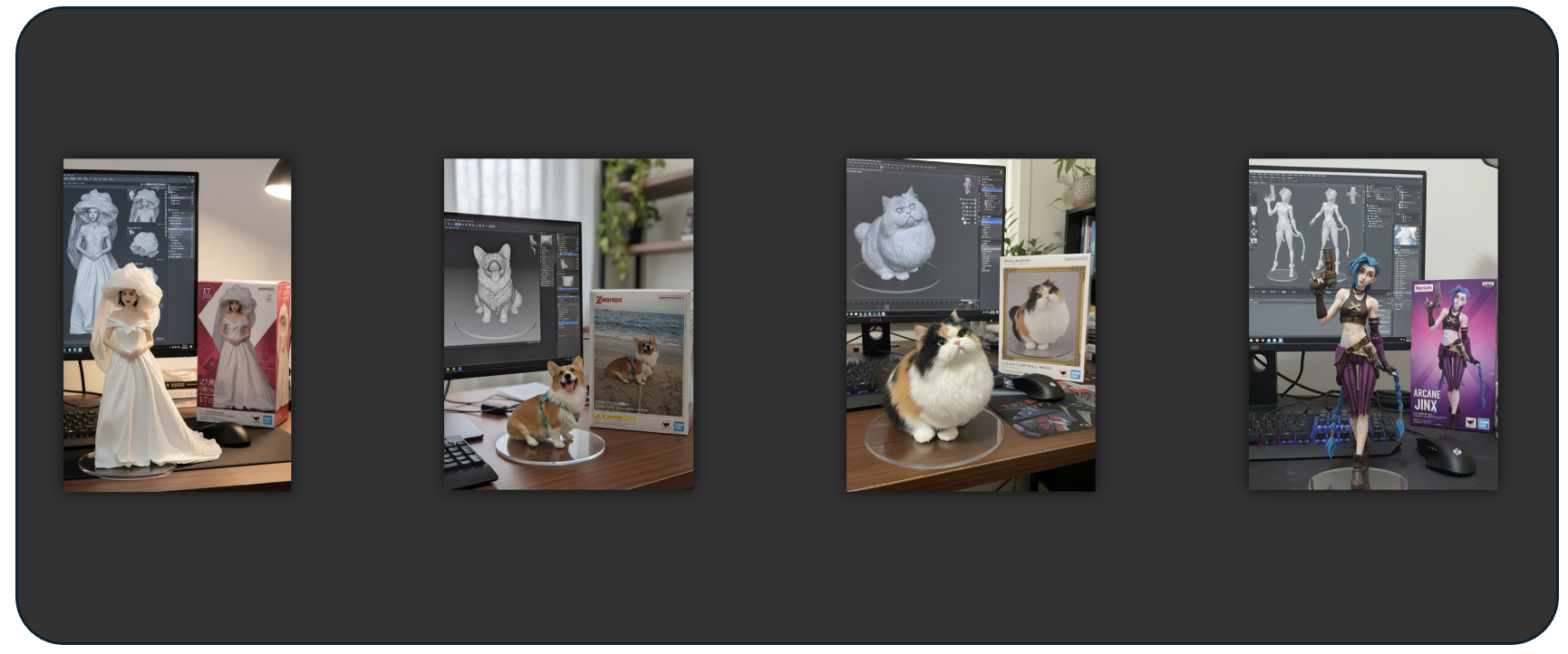
Within days of its release this summer, Chinese social platform Rednote was flooded with posts sharing a remarkably uniform format: a miniature figurine sitting in front of its packaging box and a desktop monitor displaying the modelling process.
The individual figurines themselves range from anime characters (Jinx from Arcane, Sailor Moon) to users' own pets (#turning-my-cat-into-a-figurine) and projective mini-me's (#wedding-day-me). These figurines are customizable and take seconds to generate. But while the foreground content differs, the backdrop remains consistent across thousands of posts.
While the average user of Nano Banana may well focus on the foreground content of their miniature figurines – a 1/7 scale personal asset – it is the symbolic tableaux background that fascinates us, because their visual codes reveal insights about our relationship with evolving mediums and implications for how generative AI tools are marketed.