

The 2026 FIFA World Cup is the biggest tournament in the history of the sport, with 48 teams, 104 matches, 39 days, three host nations. It is also, for the first time, being hosted by 3 different countries.
The World Cup has always been more than football, a quadrennial moment when sport becomes the container for everything else a country is working through: identity, ambition, anxiety, the particular way a nation wants to be seen.
A lifestyle app in China is rewriting who the football audience is. A Japanese coach’s notebook has become a Death Note meme. Fans from forty-eight nations are landing in America and rediscovering a country at odds with its own image.
Here, we go deep into three different markets, China, Japan, and the US, and on what the tournament is actually showing us about each of them.
China
When Xiaohongshu first announced it would broadcast the World Cup, the reaction was somewhere between confusion and amusement. This was a platform built on skincare routines, apartment tours, and travel vlogs, a place most people associated with young women trading notes about how to live better. Football, the thinking went, did not belong here.
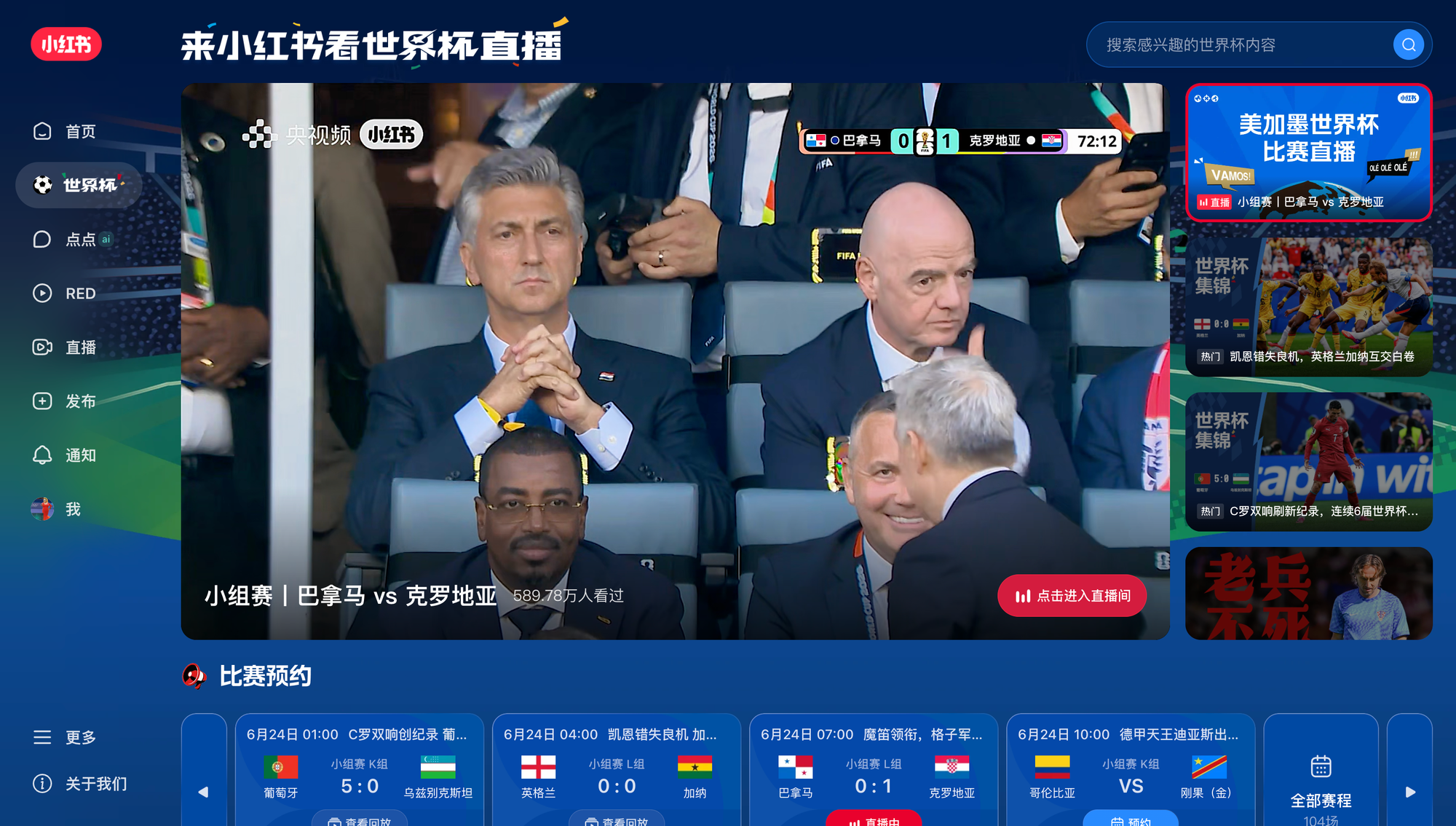
And yet in 2026, Xiaohongshu sits alongside CCTV and Migu as one of only three official World Cup broadcasters in China, holding live, on‑demand and short‑video rights. Opening‑day traffic smashed the platform’s all‑time livestream record as World Cup streams drew audiences dozens of times higher than baseline. Over just the first three days, fans racked up tens of millions of interactions in the live rooms, and more than half of the viewers were men—reversing the gender profile that built the app in the first place.
Internally, Xiaohongshu is very clear that it’s not trying to become a conventional sports site. The strategy deck frames the shift as moving “from a watching‑football platform to a World Cup lifestyle community,” treating the tournament as a 39‑day canvas to stage “watching + chatting + playing + seeding” rather than a simple 90‑minute broadcast window. The goal isn’t just to serve 30 million core fans, but to pull in “hundreds of millions of casual fans and non‑fans,” with a particular emphasis on women and younger users.
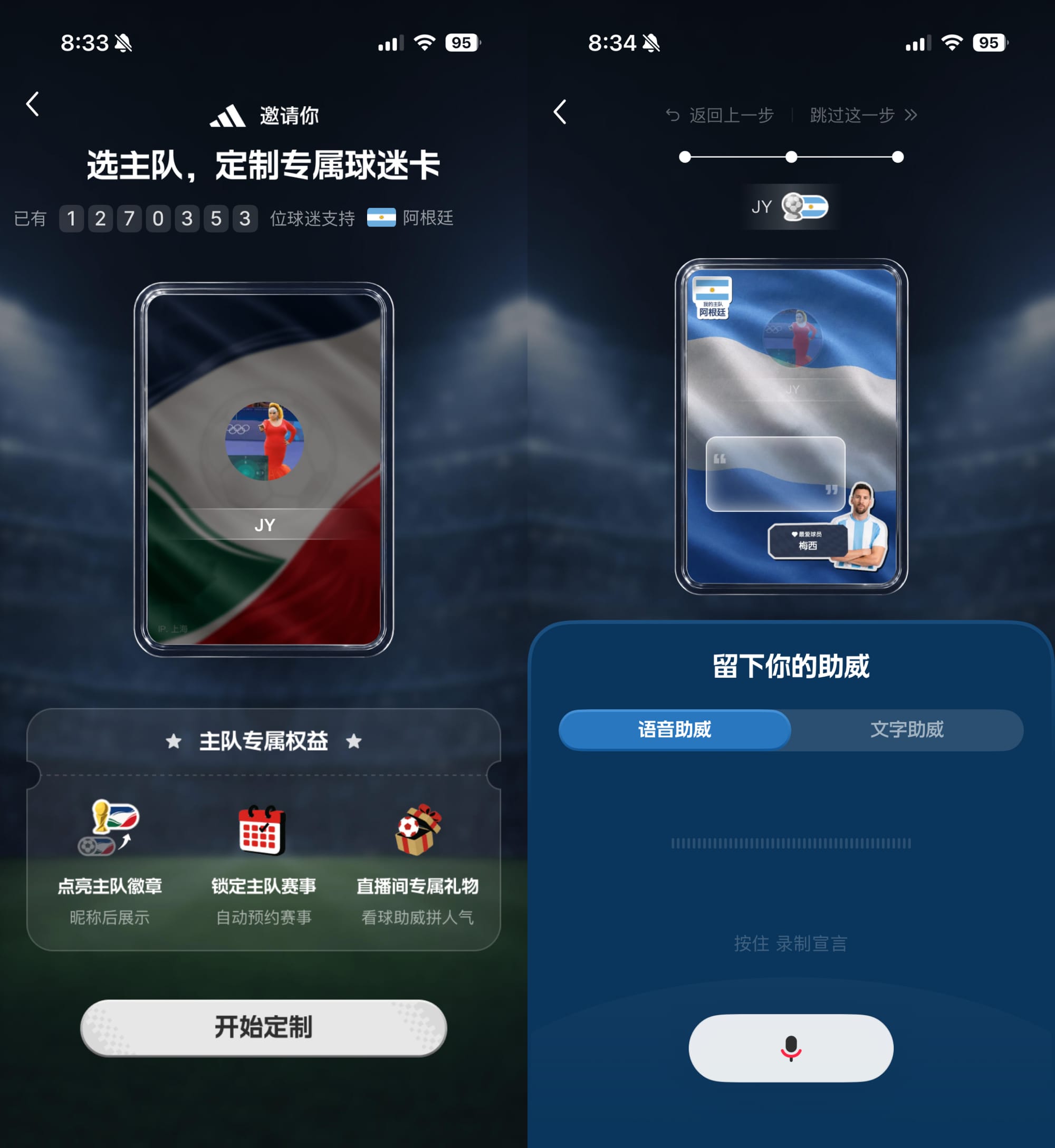
The app now opens onto a dedicated World Cup tab, with match‑prediction tools, fan cards, and team‑based “circles” that function as micro‑communities. Inside those circles, Argentina and Portugal groups quickly climbed into the hundreds of thousands of members, overtaking long‑standing sports forums in size and activity. Around them, a ring of “World Cup special modules”—schedules, prediction games, collectible player cards, real‑time hot topic feeds—turns the tournament into a rolling social event instead of a series of isolated matches.
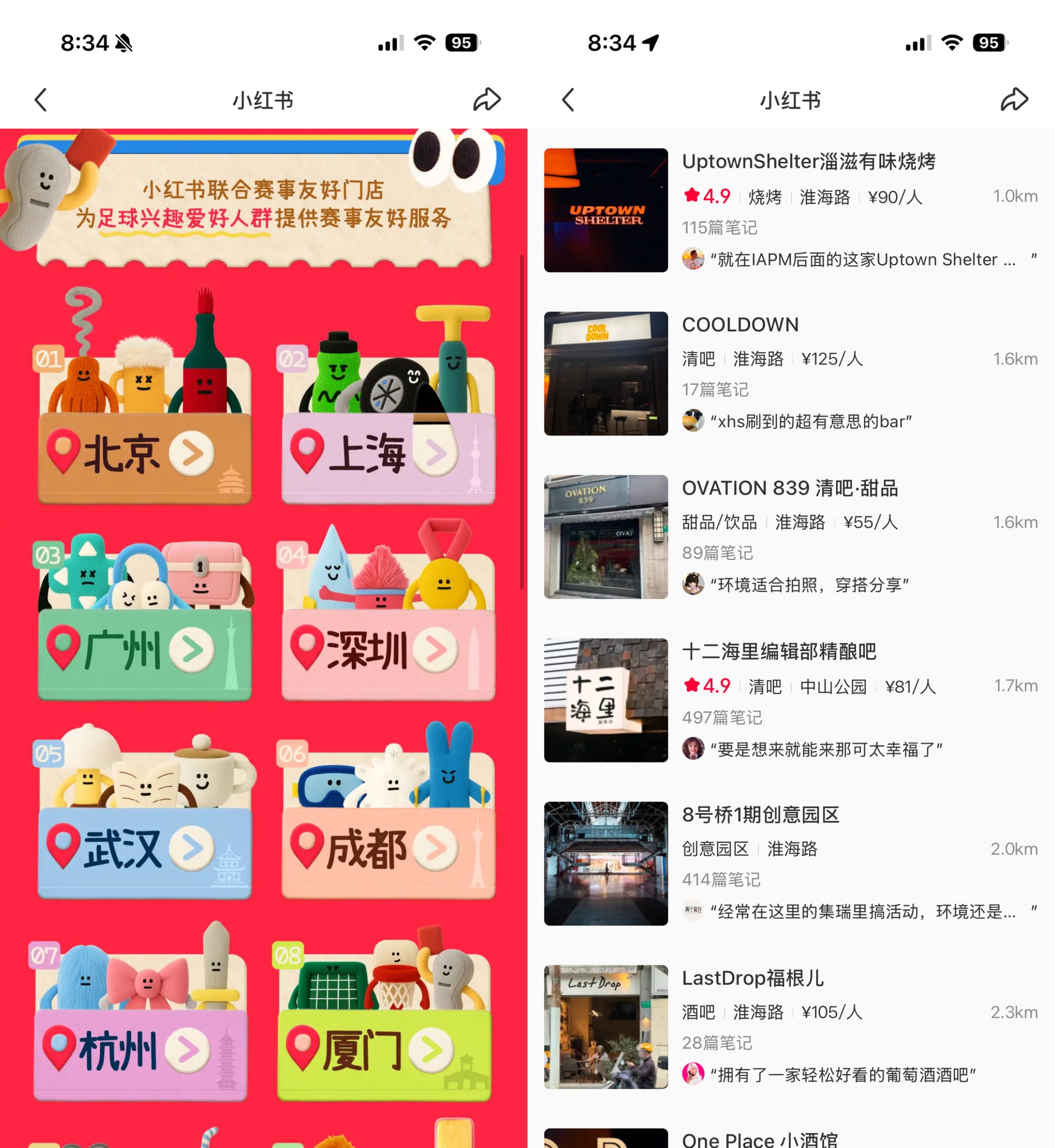
On the content side, Xiaohongshu leans into crossover. The plan is to fuse football with the platform’s native verticals: beauty, fashion, food, and travel. That means night‑game skincare routines, “what to wear to watch the match” posts, “World Cup hotpot tips,” and “watching football but make it chic” styling notes. Professional PGC comes from ex‑players and commentators, and UGCs including creators posting match vlogs, tactical explainers, emotional reaction clips. Football enters the app and immediately gets translated into Xiaohongshu’s mother tongue.
With games hosted in North America, nearly 70% of matches kick off between 2 a.m. and 10 a.m. Beijing time, with knockout matches not starting before 1 a.m. and late stages drifting into the 3 a.m. slot. For advertisers, those time zones looked like a write‑off, but people didn’t just watch one live match and leave, they dipped in and out all day through clips, comments and replays.
Users watched live when they could, then spent the rest of the day replaying highlights, scrolling fan reactions, and contributing their own micro‑content: match‑thread commentary, reaction videos, tactical breakdowns, and meme spin‑offs that kept each game alive long after the final whistle.
China has more than 200 million people who describe themselves as football fans, and during the 2022 Qatar World Cup, Chinese viewers accounted for nearly half of all global digital and social viewing time. The national team’s absence from 2026 doesn’t make the country vanish from the tournament; it just forces fandom to express itself in other ways: through sponsors, through infrastructure, and, increasingly, through platforms like Xiaohongshu.
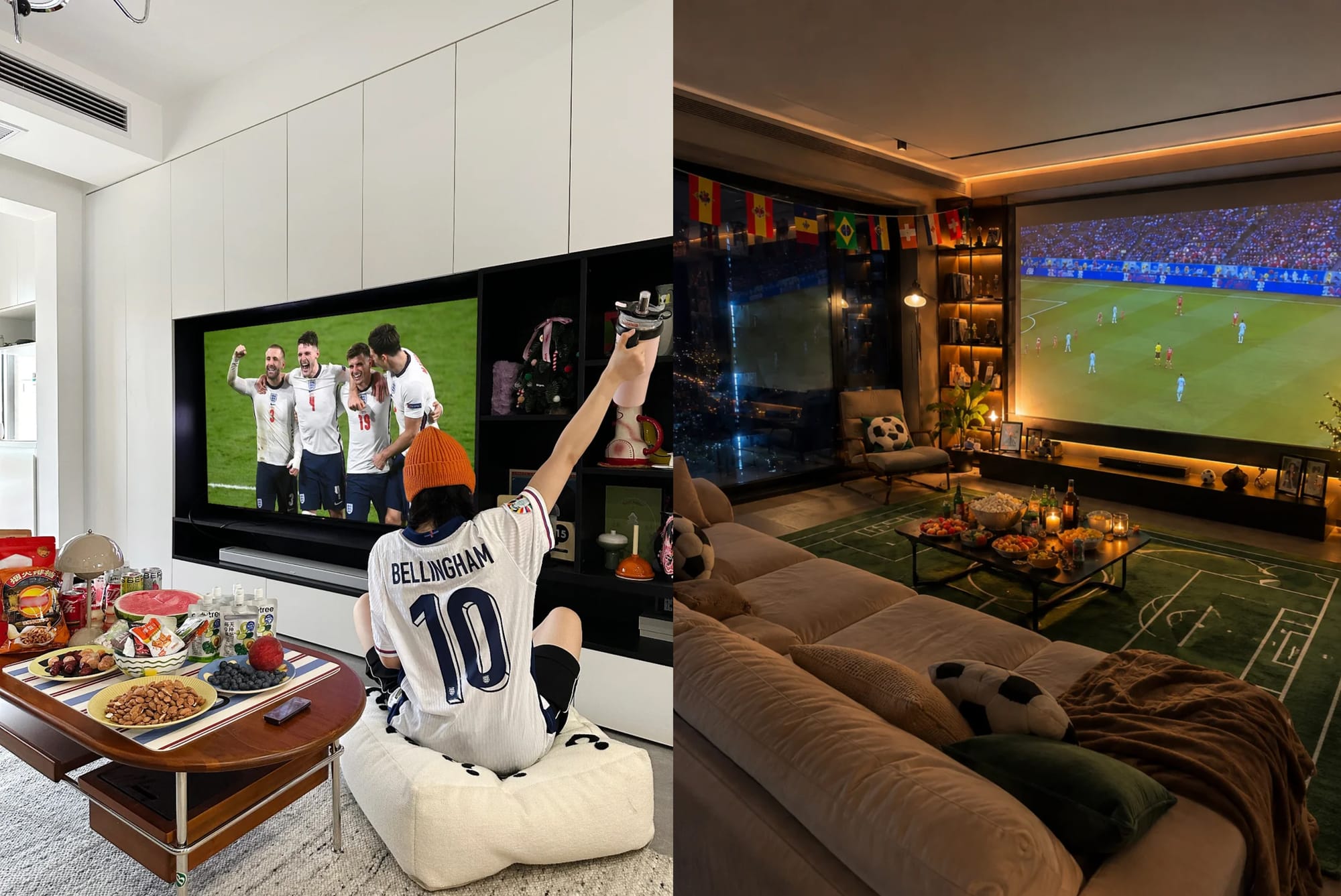
Offline, people use the app’s casting feature to put streams on TVs and projectors, then post full viewing‑party recaps back to the platform, turning their living rooms and hotpot restaurants into content stages.
Officially, the sport still carries the weight of disappointment: another qualification failure, another round of commentary about structural problems and grassroots stagnation. Unofficially, among Gen Z, football is behaving more like a lifestyle interest than a sacred national project. People join amateur leagues, university five‑a‑side teams, or loose soccer groups; our Signal data shows around 12% of Gen Z now identify as part of a “soccer group,” up from single digits in previous waves—a small but clear uptick that hints at a strengthening core of local communities, fan clubs, and campus teams. Those same circles become the nucleus for World Cup viewing parties, bar screenings, and brand activations, even without a national team to rally around.
For brands, this is the more interesting signal. The Chinese football audience is not a monolith of male sports obsessives parked in front of the TV. It includes the 100‑million‑plus users Xiaohongshu tags under “football interest”—women’s football communities, amateur “wild” teams, people who haven’t watched a full ninety minutes in years but will absolutely engage with Mbappé signing autographs for Chinese fans or Haaland's memes. Reaching that audience means understanding which version of football they’re actually watching: the match, the meme, the outfit, the late‑night snack, or all of them at once.
Japan
Football in Japan is no longer a polite participation story.
The 2026 World Cup arrives at a telling moment. Takefusa Kubo, Kaoru Mitoma, Junya Ito, Takumi Minamino, and Ayase Ueda have built sustained visibility across European clubs, shifting the domestic imagination of what Japanese football can be. Among Gen Z who already play sports, almost one in four say they play soccer regularly, putting it ahead of basketball and close behind running as a preferred activity, rather than a niche side interest.
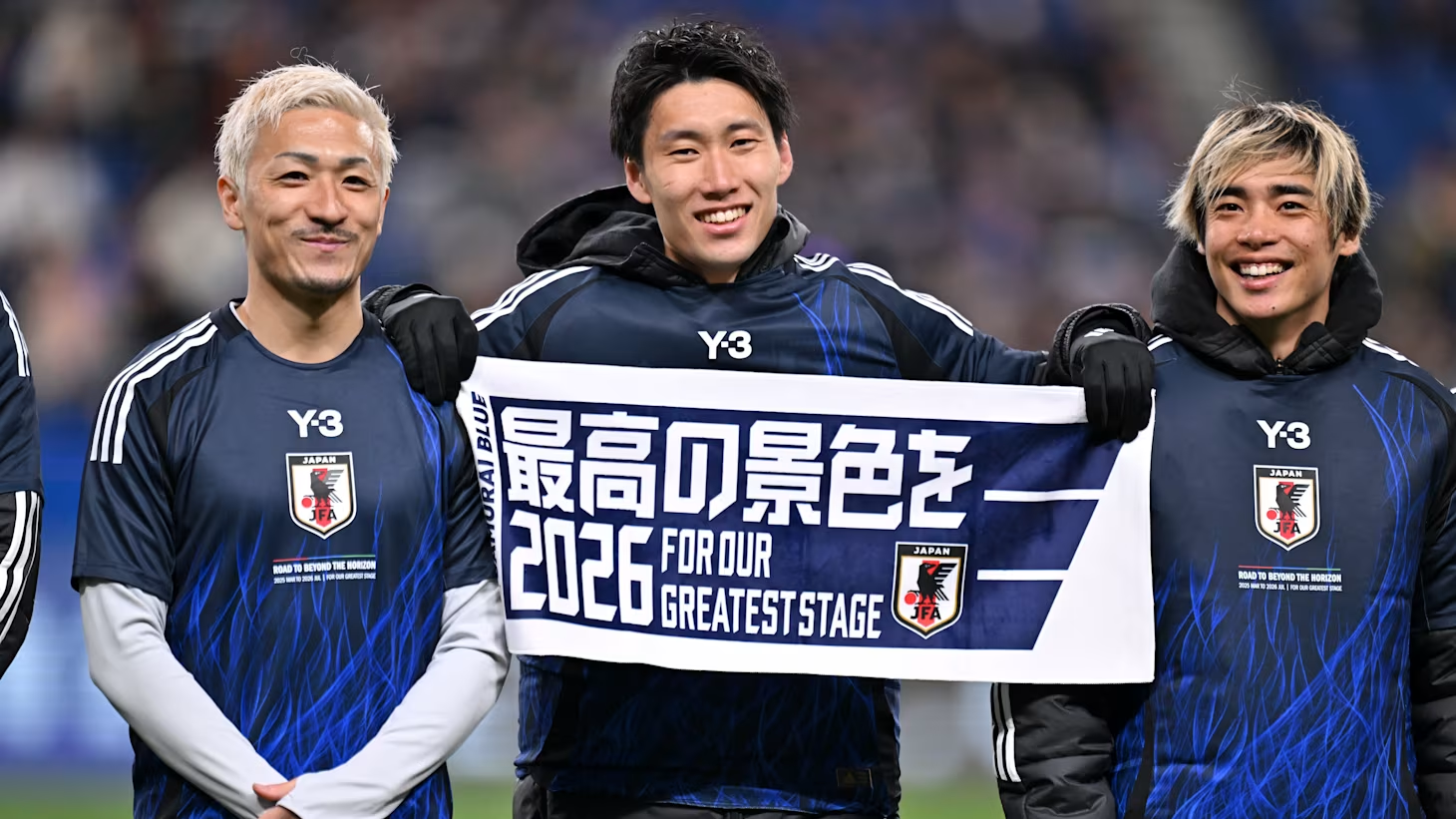
Japan's global confidence has historically moved through safer channels: industry, technology, design, soft power. Football is a more exposed arena. Results are public, the hierarchy is old and legible, and the countries that defined the sport’s pecking order are the same ones Japan is now expected to beat. Gen Z’s own aspirations tilt in that direction: when asked what they want more of in the next six months, “sports (e.g. basketball, soccer, skateboarding)” sits alongside travel and entertainment as a growth area, rather than an obligation. That ambition shows up on the pitch as much as in lifestyle.
Running through this is an older concept: gekokujo (下克上), a Japanese term dating to the Sengoku period, literally "the low overcomes the high." It described those of lower position overthrowing those above through accumulated force rather than inherited right — Oda Nobunaga and Toyotomi Hideyoshi as its canonical examples, warlords who remade the social order by making the old hierarchy untenable. Football has given it a new stage. What has changed is not the underdog position but the posture that comes with it. Japan is playing from below without performing the modesty that position usually requires.
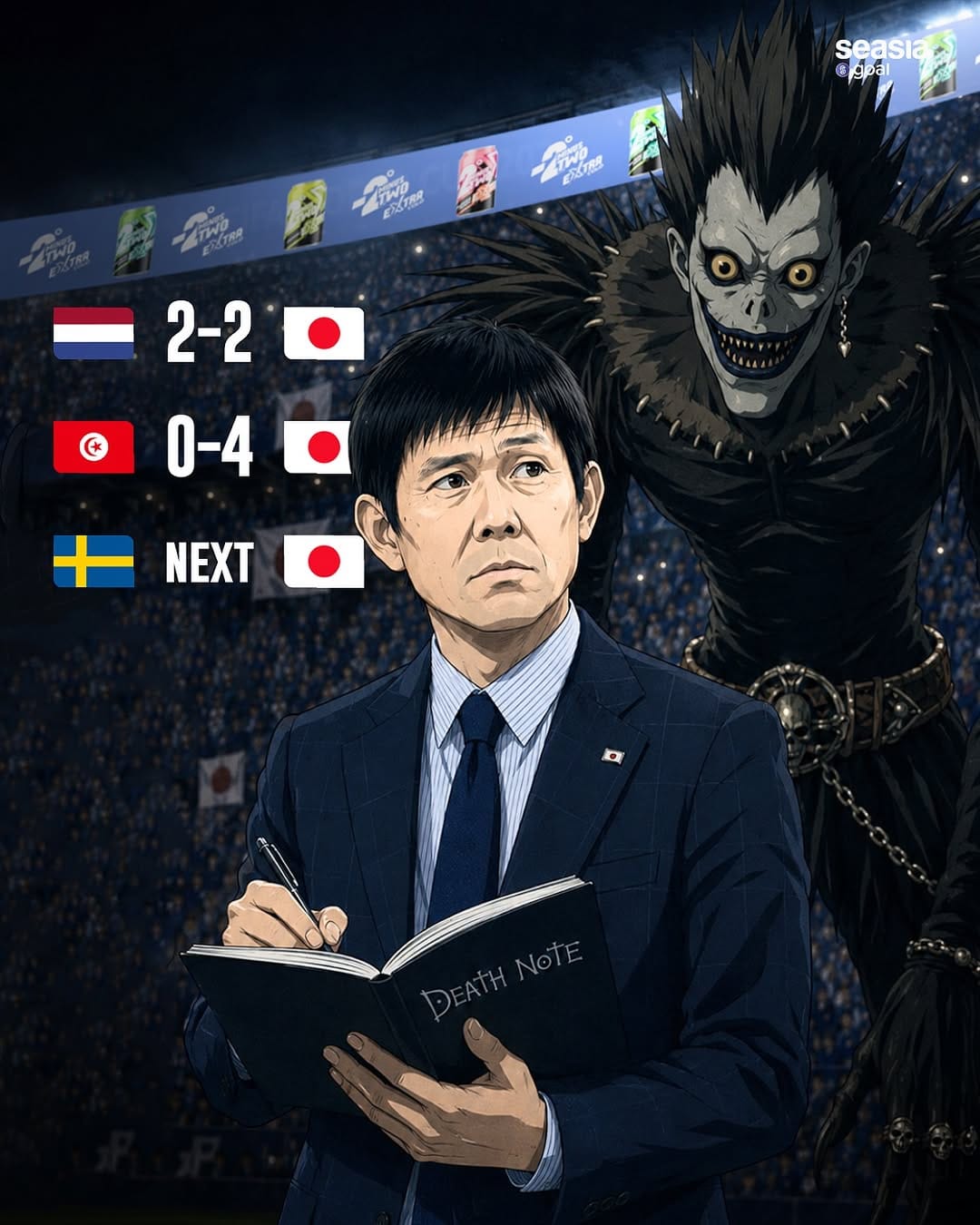
The memes circulating around this World Cup make that visible. When cameras caught Hajime Moriyasu on the touchline once again scribbling into his small notebook against the Netherlands, social media instantly revived the “Death Note coach” joke: the idea that Japan’s manager is casually writing opponents’ names into a supernatural anime notebook and bending fate to his will. At the same time, Japanese fans cleaning the stadium after matches—a tradition since 1998—went viral yet again after the draw with the Netherlands and the 4–0 win over Tunisia, only this time paired with a domestic meme captioned “do it at home,” calling out men who are meticulous about trash in stadiums but absent in housework.
Japan left their Monterrey locker room impeccable and included a thank-you message for their Mexican hosts 🇯🇵🇲🇽
— ESPN FC (@ESPNFC) June 21, 2026
(📸 @SancadillaNorte) pic.twitter.com/p4cuT3YSrm
The World Cup, then, is a cultural signal as much as a sporting one. The question it puts to Japanese football is whether discipline and organisation — long the basis of international admiration — can now coexist with the kind of ambition that makes opponents uncomfortable. Those are different qualities. One earns respect. The other earns fear.
US
Hosting the World Cup was supposed to expose America. Instead, it became an unexpected display of soft power that subtly reframed the country’s image.
In the run-up, much of the commentary treated the tournament as a risk: a five-week stress test for a country already associated with political chaos, gun violence, and broken infrastructure. The expectation was that visitors would arrive, encounter high prices and patchy transit, and leave with fresh evidence that America had finally fallen out of the “civilised world.” What unfolded instead was stranger and more generous, foreign fans fell in love with its most ordinary pieces: Waffle House, Buc-ee’s, baseball games at Fenway Park, drive-through machines with a hundred options. Watching foreign fans delight in these banalities became its own genre of content, and more importantly, it helped Americans see their everyday life reframed as culture rather than failure.
It's Scotland's first World Cup appearance in 28 years, and fans have been spotted throughout Boston reveling in the excitement of the tournament with song, chants and bagpipes. pic.twitter.com/lf2nSGtm4q
— The Washington Post (@washingtonpost) June 17, 2026
Sociologists have already noted that much of the fan traffic never touched New York or LA, but moved through Dallas, Houston, Kansas City, Atlanta and Boston instead, cities that rarely sit at the centre of the global imagination. In that context, Kansas City’s main storyline was no longer crime statistics but TikToks of Algerian players being welcomed outside training, and Scottish fans marching through Boston for their first World Cup in 28 years. The story of “America” shifted away from national caricature and down into local hospitality.
There’s a precedent for this in China. A few winters ago, Harbin, long known mostly for its Russian‑style architecture, suddenly became a breakout tourist destination, not just because of ice sculptures or infrastructure, but because visitors shared stories of warm service and small gestures, like locals affectionately calling southern travellers “little potatoes” for the extra padded layers they wore in the extreme cold. Rust‑belt and second‑tier US cities are now having a similar moment: what changes people’s perception isn’t only what has been built, but how it feels to arrive there and how you’re welcomed, joked with, and folded into the life of the place, even briefly.
Brand work followed that same tone, less triumphalist, more self-aware. Some of the most interesting activations came from improvising around constraints. When stadium naming-rights rule forced the home of the San Francisco 49ers to cover its giant Levi’s logo for World Cup matches, the brand swapped out the wordmark for a tongue‑in‑cheek “brand under review” treatment that turned a compliance headache into a meme. At the other end of the spectrum, Kraft leaned fully into American excess. When a fan's ranch dressing bottles were flagged at airport security on the way to a match, Kraft responded by gifting him a custom, TSA‑approved travel holster and amplifying the story as proof that no US cultural export is too mundane to be defended.
Levi’s is now using this “wrapped” logo as their Instagram profile pic 😄 https://t.co/0lgfsiDzXV pic.twitter.com/paLEwaviUU
— Matthieu Lamoureux (@LLLLITL) June 14, 2026
World Cup let Americans watch other people enjoy America, seeing German, Japanese or Haitian fans treat Walmart, ballparks and late‑night diners as sites of wonder became an emotional counter‑programming to domestic doomscrolling. Paired with a festive atmosphere in Mexican host cities and a more ambivalent reception in parts of Canada, the tournament has scrambled old regional stereotypes: the US doesn’t look quite as hostile as the headlines suggest, Mexico reads as generous and vibrant rather than dangerous, and Canada’s reputation as the unfailingly polite neighbour suddenly looks less automatic.