

The foundational culture of running is one of performance; and long-term the category has trended towards more discipline, more hustle culture, more records. As scientism and technology continues to lead the discourse of performance led marketing and product initiatives - running becomes another strong cultural signal of a certain type of accelerationism.
Take On's retail proposition for example - brushed metal, blue light, LED tracks and robotic arms for its Lightspray technology. This is a Singularity fantasy space.
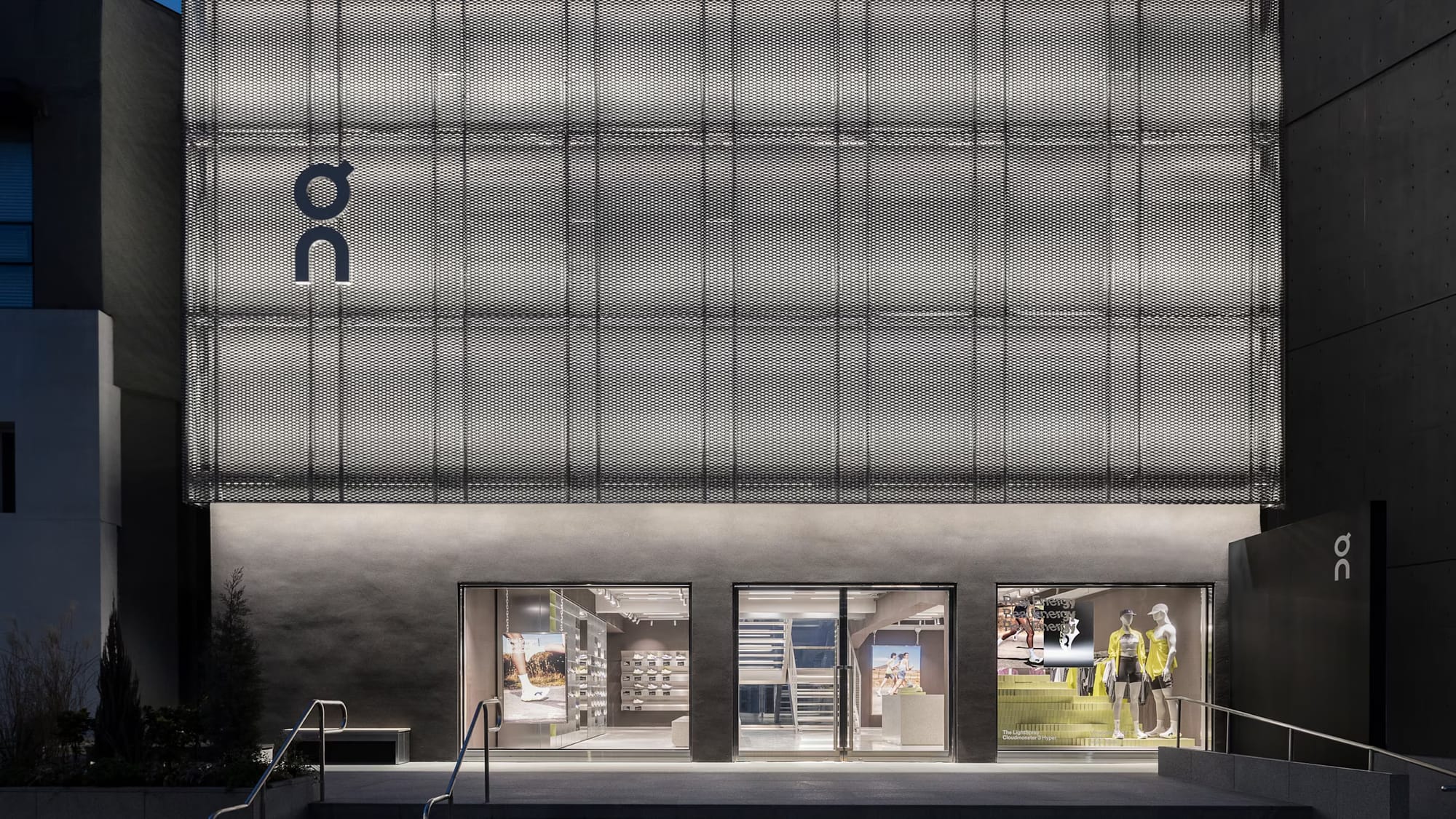
Running continues to grow worldwide. Our Signals data shows running continues to be the most engaged with sport, alongside Soccer over the past 6 months sports among 15-29 YO in Korea1.
As running grows - it proliferates into new forms. Much outside commentary is given to the style side of running; after all Seoul is home to UVU's first global flagship, and trying to get a pair of the On x PAF collab running shoes here is always a difficult fetish to accomplish for locals and tourists.
But while Korea's running scene might arguably be stylish, it's actually taking another turn: towards Cute Accelerationism.
Running in Korea is moving past a culture of tracking health, crushing PBs, and running through epic nature or cityscapes. Now, it's about making memories, a bit of lighthearted fangirling, and finding that pure, simple joy the moment your feet hit the pavement.
From a cultural and consumer perspective, what is behind the shift from a record driven running but story-driven running?
As Amy Ireland and Maya B. Kronic posit in their collection of essays 'Cute Accelerationism' - Cuteness has been framed as "...a frivolous deflation of the macho self-important rhetoric of contemporary accelerationism left and right alike," that appeals to "...those who are orphaned by post-modernity, those with no future and no investment in tradition, the swarming e-girls, t-girls, NEETS, anons, and otaku for whom the internet is level one."2
Ireland and Kronic note that in English, the etymology of 'cute' has morphed from meaning sharpness (acute) to a physical descriptor for packaged aesthetics.3 Today, across languages - including gwiyeoum (귀여움) in Korean, méng (萌) in Chinese or kawaii in Japanese - cuteness involves a range of behaviors that are popular ways to express affection and softness.
Outside of its common use in Anime and idol culture, 'cuteness accelerationism' appeals as an alternative mode to 'performance accelerationism' for running in Korea because the societal meaning of success in Korea is evolving.
South Korea is perceived and portrayed to be hyper-competitive, hyper-active, and hyper-attentive. It's the vision of Korea as always online and never asleep, the overstimulation Korean philosopher Byung-Chul Han captures in the opening paragraph on 'Beyond Disciplinary Society' in 'The Burnout Society' (2015), and modernity's obsession with self-optimization.
“Today’s society is no longer Foucault’s disciplinary world of hospitals, madhouses, prisons, barracks, and factories. It has long been replaced by another regime, namely a society of fitness studios, office towers, banks, airports, shopping malls, and genetic laboratories. Twenty-first-century society is no longer a disciplinary society, but rather an achievement society [Leistungsgesellschaft]. Also, its inhabitants are no longer “obedience-subjects” but “achievement-subjects.” They are entrepreneurs of themselves.” 4
But over the past 3 years we've watched a steady shift from goal-oriented to happiness-oriented definitions of success, expressed via a desire for autonomy (46%) and critically, a rise in 'realizing happiness can achieved despite things not working out as planned (32%).'5
From a values perspective, young Koreans still prioritize 'material stability' (76%), 'fitting in' (76%), and 'actively building supportive relationships' (77%) - while responding to the negative outcomes of 'work-life balance' (12%) and 'managing physical health' (20%).6
This is the socio-cultural context that gives rise to the cute accelerationism of running in Korea. So, how is this translating into brand-led activity that appeals?
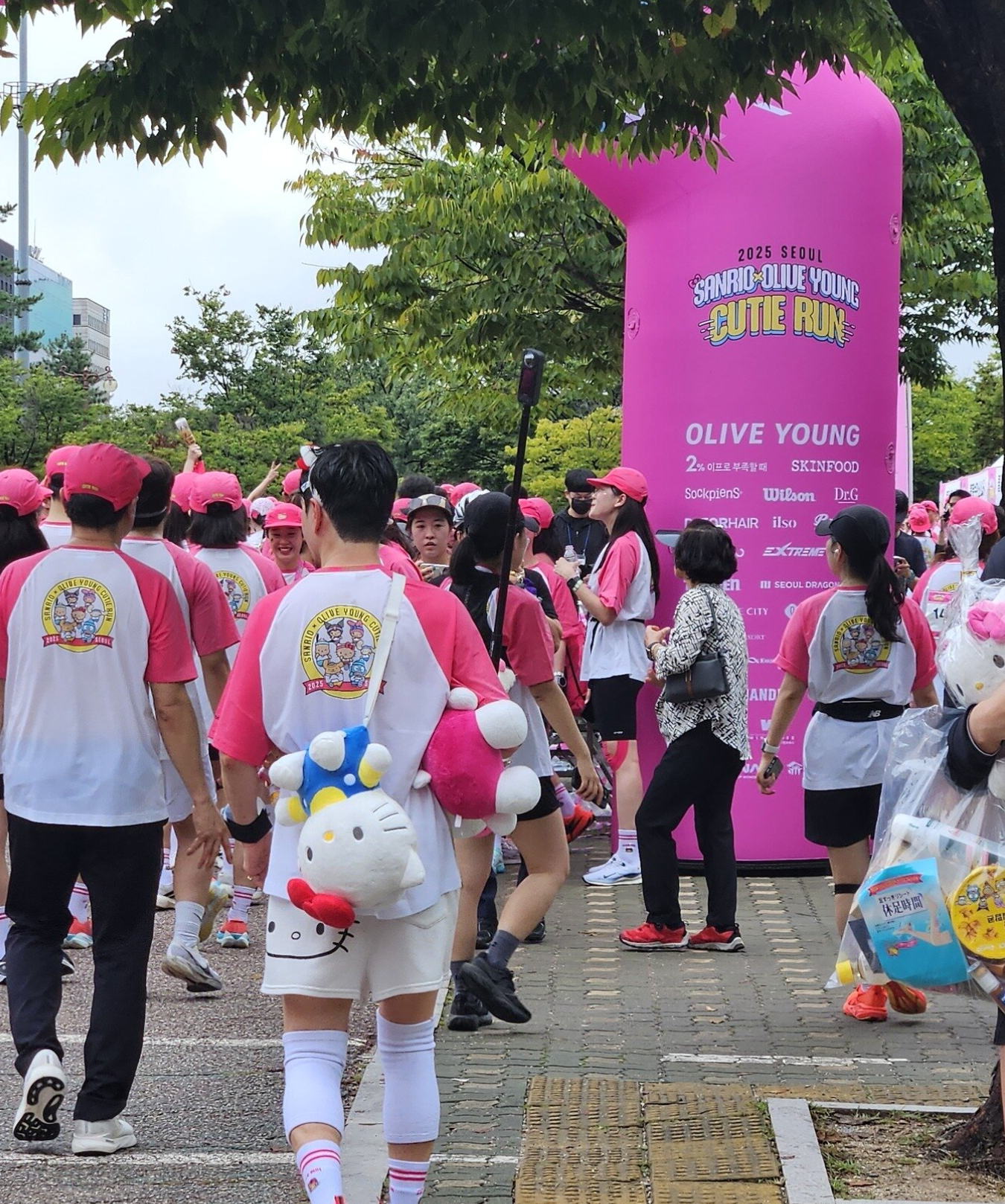
Last fall, Jeju hosted the Pokémon Run before it was held in Japan (the actual birthplace of Pokémon). Okinawa, Japan, is finally hosting one this year. And while "Run Disney" exists inside the theme parks, Korea has its very own unofficial version, where people dress up as characters to race, like Halloween. Last year, Korea’s biggest health and beauty retailer, Olive Young, even threw a Sanrio-themed run.
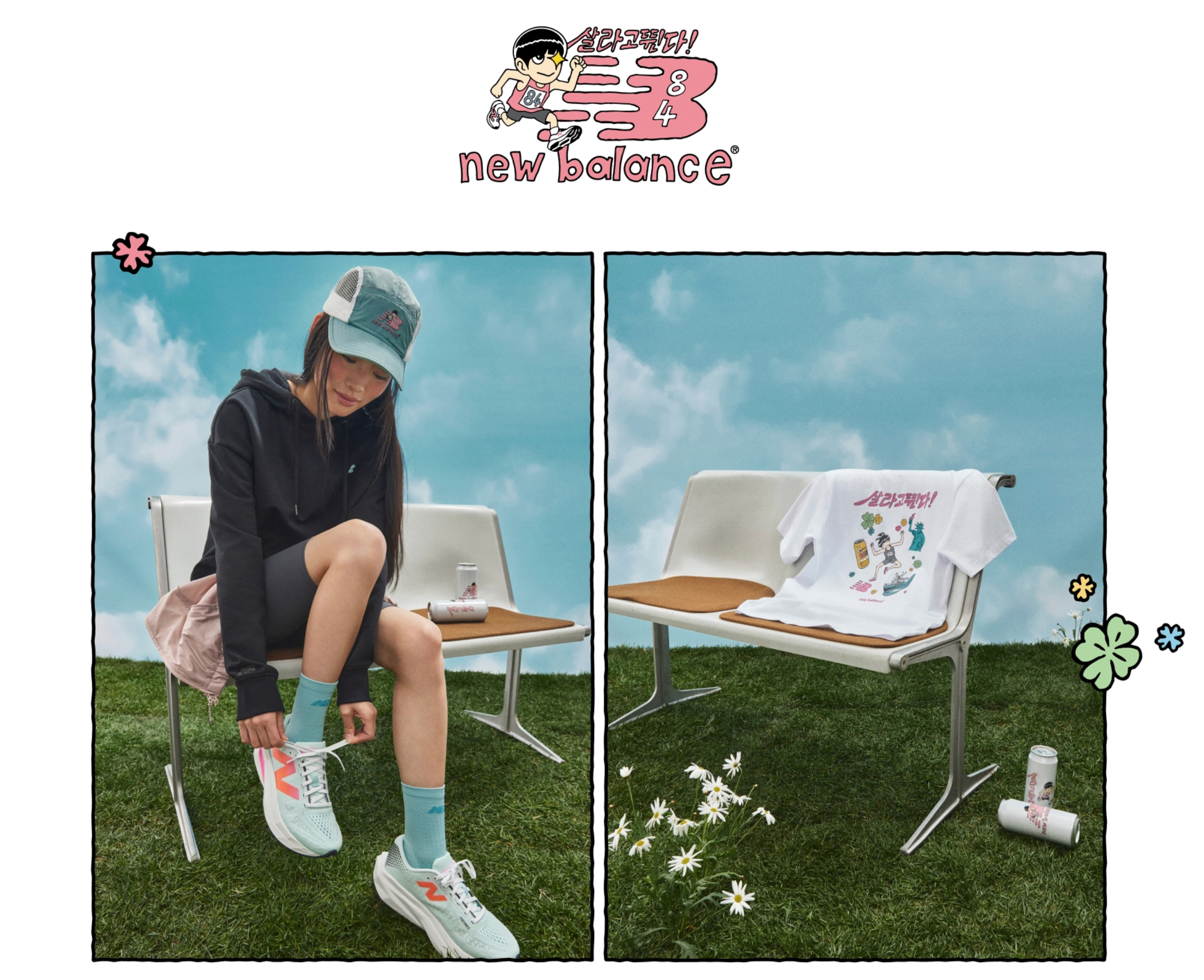
Last week, New Balance dropped a special collection with the famous Korean webtoon artist, Kian84. Like many runners, he originally started to manage stress and ended up in a full marathon. Watching his journey on TV lit a fire under everyday people who used to be intimidated by running. The reality show documenting his marathon challenge hit #1 in its timeslot, breaking a 10% viewership rating—which is impressive in today's post-TV era. His raw, human story genuinely moved viewers.
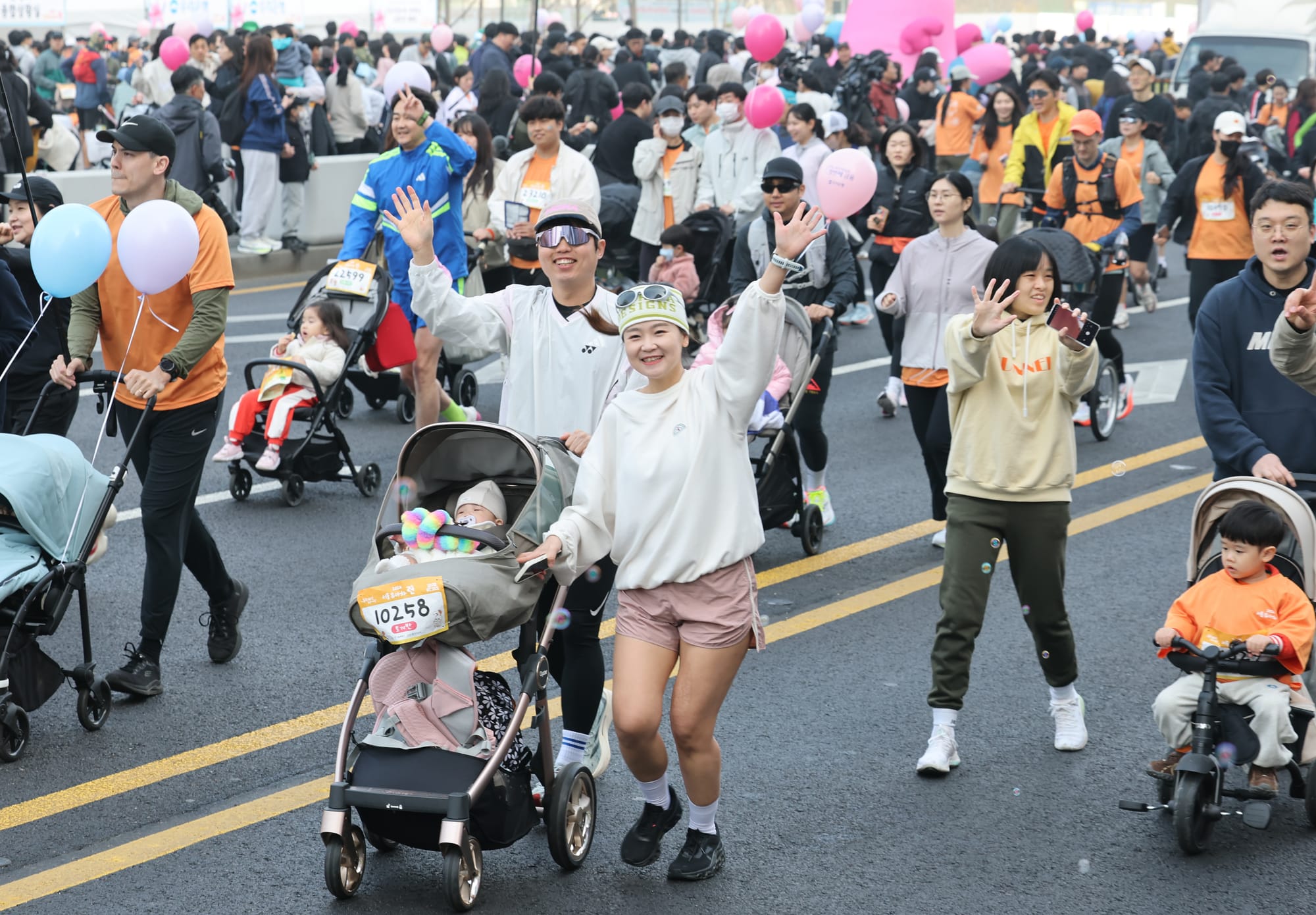
We’re also seeing more running events designed for the whole family. The "Stroller Run" hosted by the city of Seoul brought out 5,000 families - roughly 20,000 to 25,000 people. Considering the legendary Boston Marathon draws around 30,000 runners every year, that’s a huge turnout. IKEA is planning to host an "IKEA Run" right inside their stores.
With cute accelerationism, running is shifting away from the performative pressures of joining a hyper-cool crew to flex fast paces and slick photos on social media. As for running crews? People are no longer just scouting for them on Instagram; They’re jumping on Karrot (a Korean local community app) to run with actual neighborhood friends.
With its unmatched safety and diverse scenery within easy reach, Korea is the perfect place to run. Because of this, running is quickly becoming an all-ages sport, with the 30s and 40s demographic really driving the scene. It feels like this "cute" evolution perfectly captures what Korean consumers actually want right now - treating running less like a hardcore competition, and more like what Byuk-Chal Han might call 'healing'.
References
1, 5, 6 Signals, Inner Chapter, 2026
2, 3 Page 4-5, Cute Accelerationism by Amy Ireland and Maya B. Kronic, published by Urbanomic, 2024.
4 The Burnout Society by Byung-Chul Han, published by Stanford University Press, 2015