

In early 2026, South Korea's Dubai chewy-cookie craze burned out in 17 days.
17 days was the time it took for Naver search interest in dujjongku, short for Dubai jjondeuk cookie, to fall to half its peak. Croffles, the croissant-waffle hybrid that was everywhere between 2020 and 2021, took 163 days to hit the same point. Tanghulu took 54. Dubai chocolate itself lasted 13. In five years, the half-life of South Korea’s most visible dessert trends has contracted dramatically.
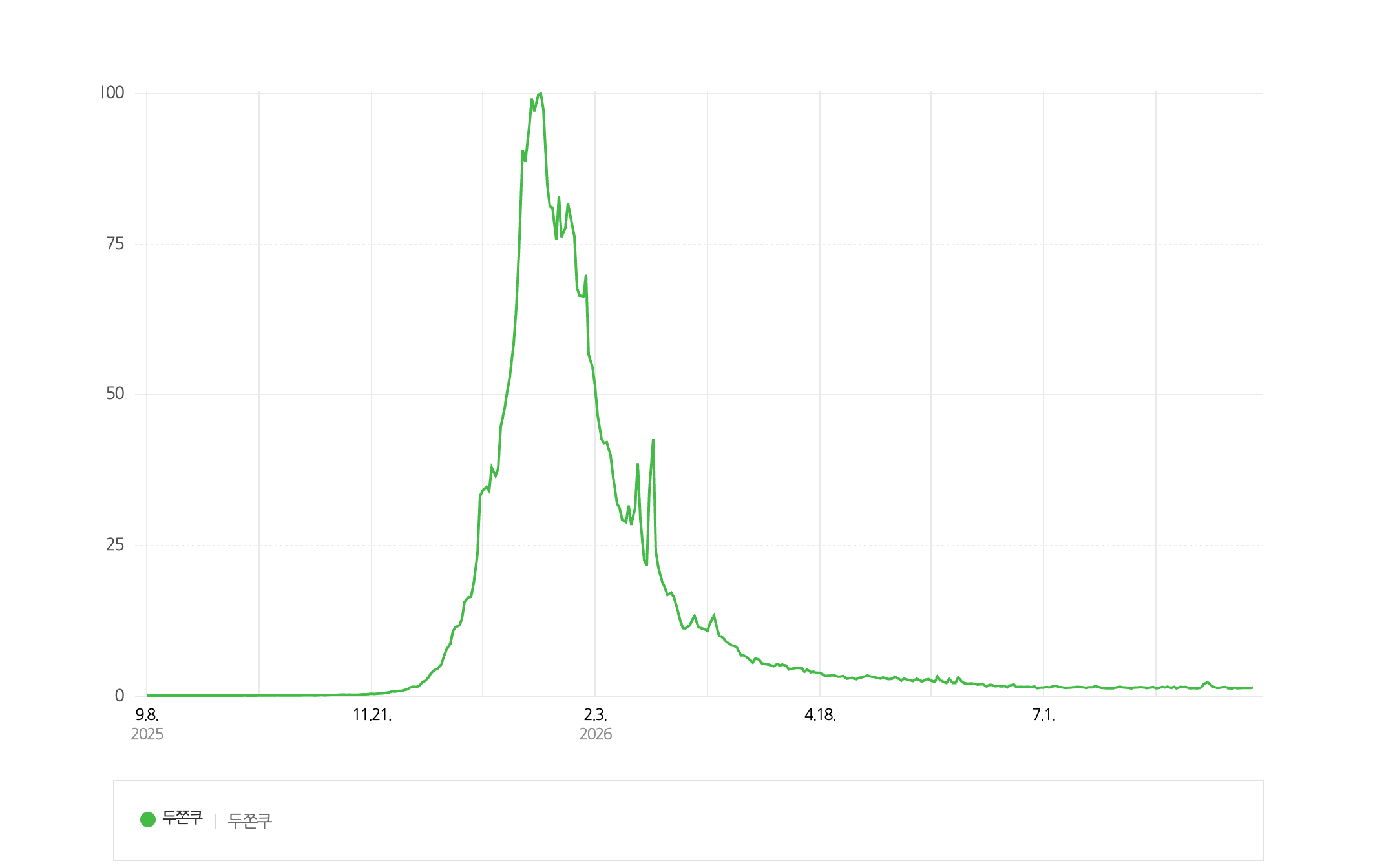
Dujjongku was designed for this exact environment. It was a local mutation of Dubai chocolate’s now globally recognizable formula: a thick chocolate shell, pistachio cream, shredded kadayıf pastry, and a chewy cookie base, sometimes replaced by tteok, the Korean rice cake commonly called mochi outside Korea. It had an aggressive cross-section. Cut it in half and there it was: pistachio green, dark chocolate, tangled pastry, an almost absurd amount of filling. Crunch, pull, density, a familiar foreignness. You did not need to taste it to know what it was supposed to mean.
Food has never been only about food. A Michelin reservation, like the table Patrick Bateman obsesses over securing at Dorsia, is a status object before it is a meal. Restaurants are places to work, flirt, negotiate, date, perform wealth, and decide who gets access to whom. Food can express class violence, as in the long political afterlife of “let them eat cake.” It can also be care, domestic labor, religious ritual, migration, celebration, grief, and community.