Teenage Reverse Engineering

In this piece, we explore how the union of reverse engineering, vibe coding and accessible fabrication is reshaping the meaning of brand models and how product markets might operate.

On 19 September a Shanghai user called 特伦斯张 posted a short video to Xiaohongshu. The caption read: “Teenage Engineering’s OP-1 is twenty-thousand-plus yuan, it’s too expensive, so I had GPT-6 clone one for me. It took half an hour and didn’t get in the way of my becoming a music master.” [1]
In the replies someone else had done the same with the OP-1 field: the look was “99% there”, even if the animations and the sound engines were not. One user asked for the link, another asked if there was a plugin available.
Right after that, Highsnobiety published an interview with the founder of Teenage Engineering, Jesper Kouthoofd, in which he said that, as part of a reorganisation set in motion the previous autumn, he had told his team the company would stop making synthesizers altogether, including the OP-1.[J1]
“Everyone was like, ‘What are you talking about?’ But I’ve come to the conclusion that, for us, the products aren’t the business. We can be so much more than that.” [2]
Fifteen Years of Love-Hate
In 2011, the OP-1 was a breakthrough product for Teenage Engineering. The device’s cartoonish simplicity and its insistence on being played rather than operated became the template for a company whose products, in Highsnobiety’s words, “combine minimalist industrial design with a quirky, almost childlike sense of humor”.
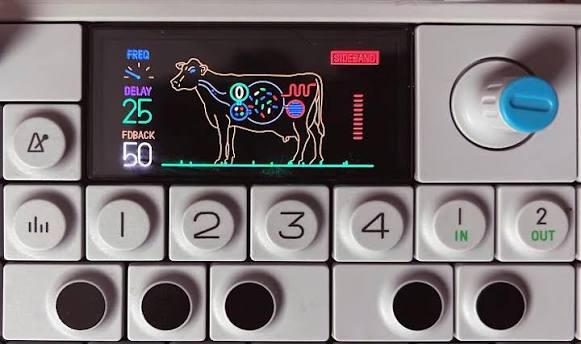
If you haven’t used one, the OP-1 features a cow whose four stomachs visualise different delay effects, while launching the sequencer displays the phrase “Marx was right.”
The precedent for idiosyncratic identity evolved into devices like the EP-1320 medieval, which ships with Old English fonts, Latin labels and hundreds of medieval samples. The EP-40 Riddim, a reggae groovebox released last November with sample packs from King Jammy and Mad Professor, comes with an optional handheld “Ting” FX mic, a homage to the dub sound system. [3]
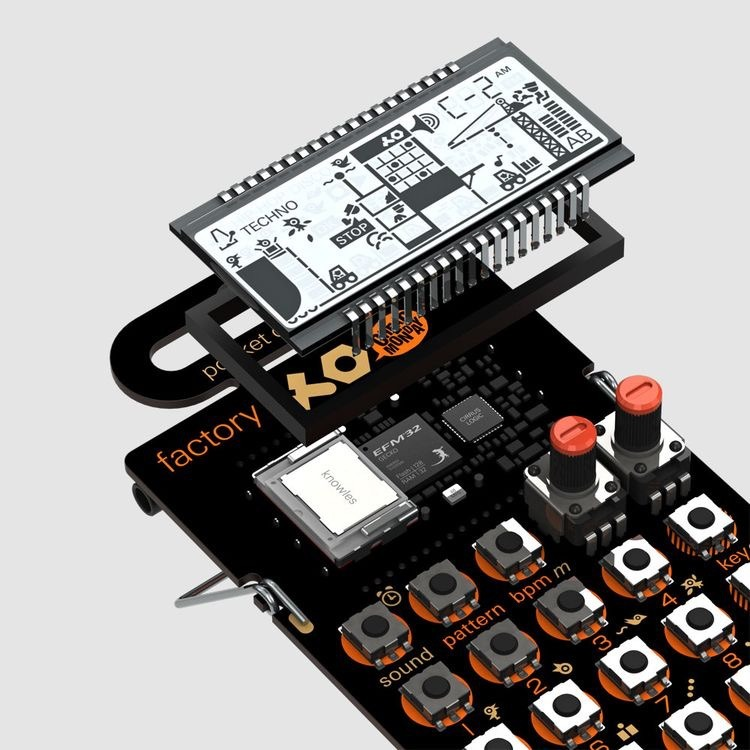
The cheaper devices have always drawn curiosity and affection towards the brand, and each release graces a certain kind of design blog or gift section for aesthetes, because they’re wonderfully fun and imaginative products. The $60 Pocket Operators from 2015 were a welcome addition for budget and mobile synths; even Redditors on r/synthesizers conceded they were “very fairly priced and a lot of fun”.
But the seriously priced products have always generated something closer to a love-hate dynamic, and the announcement brought forum-style sarcasm out in full.
On r/synthesizers, the top comment on the Highsnobiety story ran: “Going into full time wooden doll making then, I guess. Good for them but what will Instagram do without their support?”
Below it, comments like: “They wanted to be a luxury design studio” and “TE basically tied the MSRP to the amount of hype they had.”
Redditors jokingly proposed the company might change its name to ‘Juvenile Logistics’ but some gave more serious consideration to the change in business model: “the brand is the product and the commodity develops the brand, and the end goal is to lift the business away from material commodity production entirely.” [4]
Teenage Engineering choir with OP-1 field
On Xiaohongshu the sentiment was similar: 太贵了,这是土豪 engineering,不是少年 engineering. Too expensive. This is Tuhao Engineering, not Teenage Engineering. [5]
Teenage Engineering knows the synths are divisive. Kouthoofd has said, “Ninety-nine percent of people who buy synths don’t use them as a productive tool for making music. It’s therapy. It’s entertainment. It’s a hobby. That’s what the OP-1 is. The first version didn’t even have an undo button.” [2]
The Market Teenage Engineering Made
From the outside, the synthesizer business looks like a niche category. But for the audience of professional musicians, bedroom producers, and dance music nostalgists who buy these products, it feels like a niche that many brands are exploring.
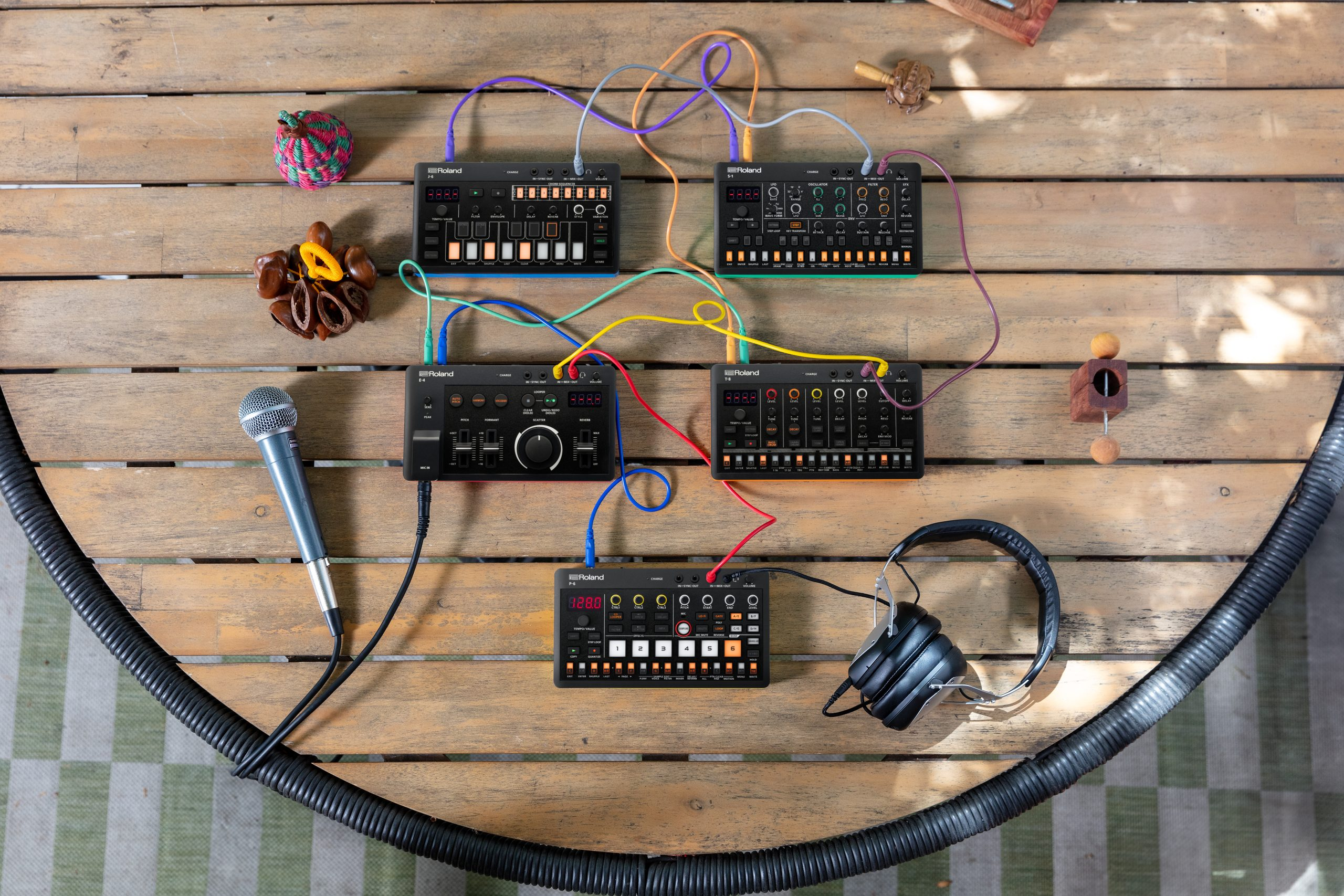
The musical-instrument major brands have all created OP-1 challengers with lower prices. Roland’s AIRA Compact line put a sampler, a synth and a drum machine into €199 pocket boxes while Korg’s NTS-1 ships as a $150 kit you assemble yourself. Yamaha’s Seqtrak, a chewing-gum-shaped workstation with its own speaker, arrived in 2024 and was received on Chinese social media under a single word: 平替, pingti, the acceptable substitute, “OP-1 的平替”. [6]
Then came the second wave, the one that competes with the sensibility of Teenage Engineering’s products. SOMA Laboratory, Vlad Kreimer’s Russian-founded synth house, has a devoted following for products that share a quirky experimentalism in visual and sound design. Its Cosmos is described as “a drifting memory station designed to work with meditative states through music”; its Enigma, shipping since August, dispenses with keys and knobs entirely and is played by placing found metal objects onto a sigil-marked sensing field. [7]
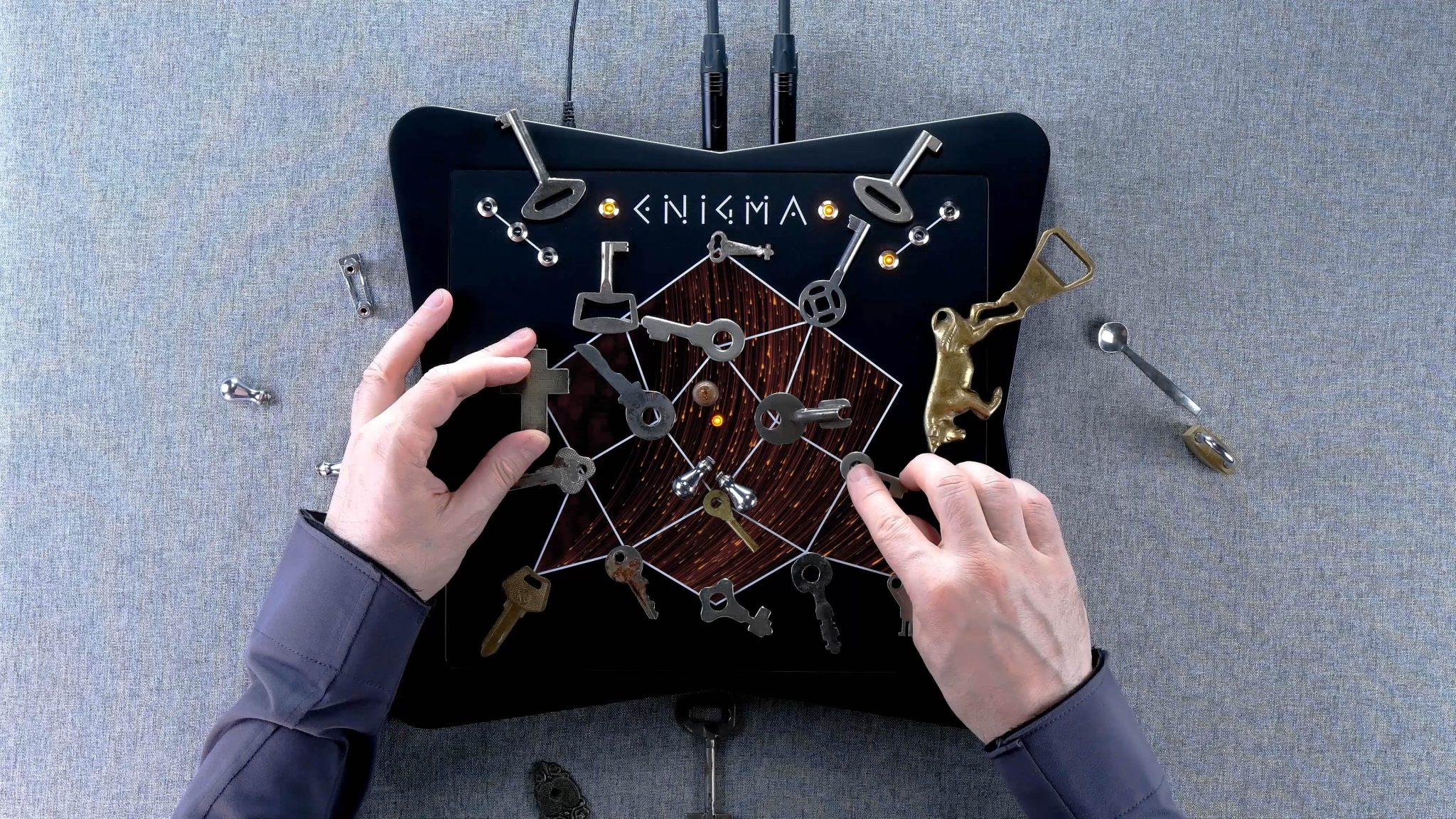
More recently, Kevin Parker of Tame Impala fame’s Telepathic Instruments released Orchid, a vibey $699 chord machine whose design has been called “alt-universe Teenage Engineering” [8], while viral synths are coming out of crowdfunding platforms like Kickstarter. One breakout, Nopia, a pastel semi-modular harmony generator by the Argentine designers Martín Grieco and Rocío Gal, passed $1.4 million in pledges within 24 hours of launching in September. [9]
And the list goes on. Circuit-bent planchette synths with a good/evil switch sell on Etsy. Donner, a Shenzhen company that previously cloned the legendary Roland TB-303 and the SH-101, leaked ‘Sample Boy’ on its Amazon listing this August, and the Chinese internet reaction was hope that it would “drag down the price” of Teenage Engineering’s delicious TP-7. [10]
“I don’t know how many times I’ve seen something described as the ‘OP-1 killer’,” wrote one Redditor. And that’s where we’re heading, a category is owned until the moment its vocabulary becomes generic. [4]
Beyond Category Ownership
The classic branding analysis of this is available and largely correct.
Roberto Verganti’s design-driven innovation posits that radical innovation changes what a product means, rather than what it does, and Teenage Engineering refused from the start to define its synths as productivity tools. [11]
In Innovation: Brand It or Lose It, David Aaker argues that branded innovation must raise the parent brand’s energy, stature and credibility, and that a brand bound to one category inherits that category’s lifecycle. [12]
With this framing, Teenage Engineering’s retreat from synths is textbook: diversify before the category closes in on you. Teenage Engineering is not short of other products; the Playdate console with Panic, the founding design partnership with Nothing, the EPA-1 moped with Vässla, the Rabbit r1, and yes, the $2,000 choir of wooden dolls, offer a huge portfolio of synthesizer category exits already.
But Aaker’s frame belongs to a world where brands could be neatly put in categories, and where competitors were other brands.
Despite the frenzy of in-category competition, the real threat to OP-1s comes from the consumer.
Clayton Christensen’s original definition of disruption described innovations that were “technologically straightforward, consisting of off-the-shelf components put together in a product architecture that was often simpler than prior approaches”, offering “a different package of attributes valued only in emerging markets remote from, and unimportant to, the mainstream”. [13]
Software for O
The week Kouthoofd’s interview went live, the fastest-growing repository on GitHub was a project called REA, Reverse Engineer Anything. Created in April, it went from under ten thousand stars on 6 October to over a hundred thousand by the 12th and past 280,000 by the time we wrote this article.
REA is a Model Context Protocol server that hands complex decompiling skills to an LLM. The intro: “See a feature in an app that you want in your own product? Ask your agent to investigate it with REA. It can inspect the app without its source code, explain how the feature works, show the evidence, and build a version for your project.” [14]
In the same fortnight an Atlanta developer called Brandon Thomas published seven desktop applications that reproduce Photoshop, Illustrator, Premiere, Lightroom, Acrobat, After Effects and InDesign, built largely with Claude and released under MIT.
Thomas’s post read, “Software is over. But for real. I just one-shotted Photoshop. The whole thing. My construction contractor neighbor created an elder care app and has users.” A week later he added Word, PowerPoint, and Excel. [15]
All-In host and tech hype-man Chamath Palihapitiya said on his podcast: “IP and software was effectively rendered worthless two days ago”, and that “these folks basically decompiled it, distilled it, and published open source versions”, and that “when all of these things are headless…the value of IP no longer exists in software.” [16]
XBOX Labs embraces recomps and decomps with the launch of XBOX Labs
Entrepreneur Nikita Bier tweeted a summary of where consumers might take this: “Hello computer. Decompile and distill Grand Theft Auto. Make the game set in my hometown – use Google Earth to reconstruct it in pixel-perfect detail. Make the character me and have my spawn point be in the mansion I always look at on Zillow. Review my chat memory and make every mission about my hopes and dreams. Make it playable online so my friends can join.” [17]
The tweet was speculative trolling — but taking the ‘We got X before we got GTA6’ meme literally, a developer in Taipei set out to make a browser GTA set in Ximending, with ninety-three missions, an MRT and a convenience chain called 7-TWELVE, which cost him “more than US$10,000 in AI tokens” and went viral a month before Rockstar’s November release. [18]
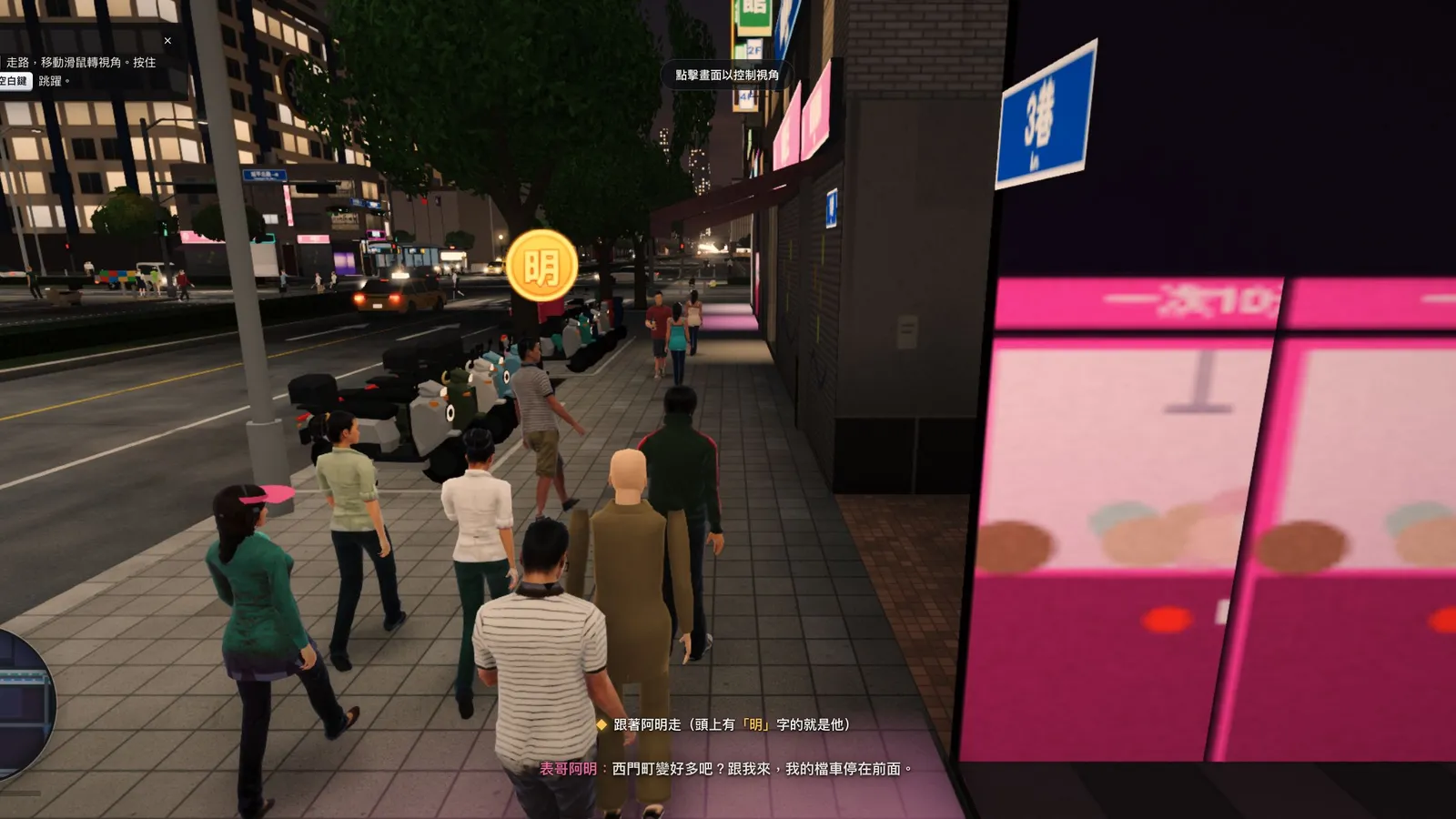
To get back to music, we need to talk about what’s happening in software too. Leading DAW (digital audio workstation) maker Ableton first released ‘Max for Live’ back in 2009, which “effectively opens up the Live platform, allowing users to create and edit their own devices”. [19]
For fifteen years that remained a hobby for people who could patch, much like decompiling remained a specialist skill for people with extreme technical skill and interest. While there’s definitely IP theft in decompiling, it felt more like Indiana Jones than Napster-and-Limewire-era piracy.
On the Cycling ’74 forum this year a user asked, “ChatGPT gave me a Max for Live script: I don’t know where to paste it.” [20] But with advances in LLMs, patching has become something to delegate for those without the technical know-how. On Xiaohongshu a Beijing producer asked the question: “If an AI agent can make its own audio plugins, will we still need to buy plugins?” [21]
The Three-Hundred-Yuan Platform
The hardware question followed soon from Shenzhen, the spiritual centre of a specific type of innovation. The M-Vave FM-1 is a pocket FM synth that sells for just over three hundred yuan (around $80) on Amazon, built on a Bluetooth-speaker chip and a synth engine borrowed from an open-source DX7 emulation.
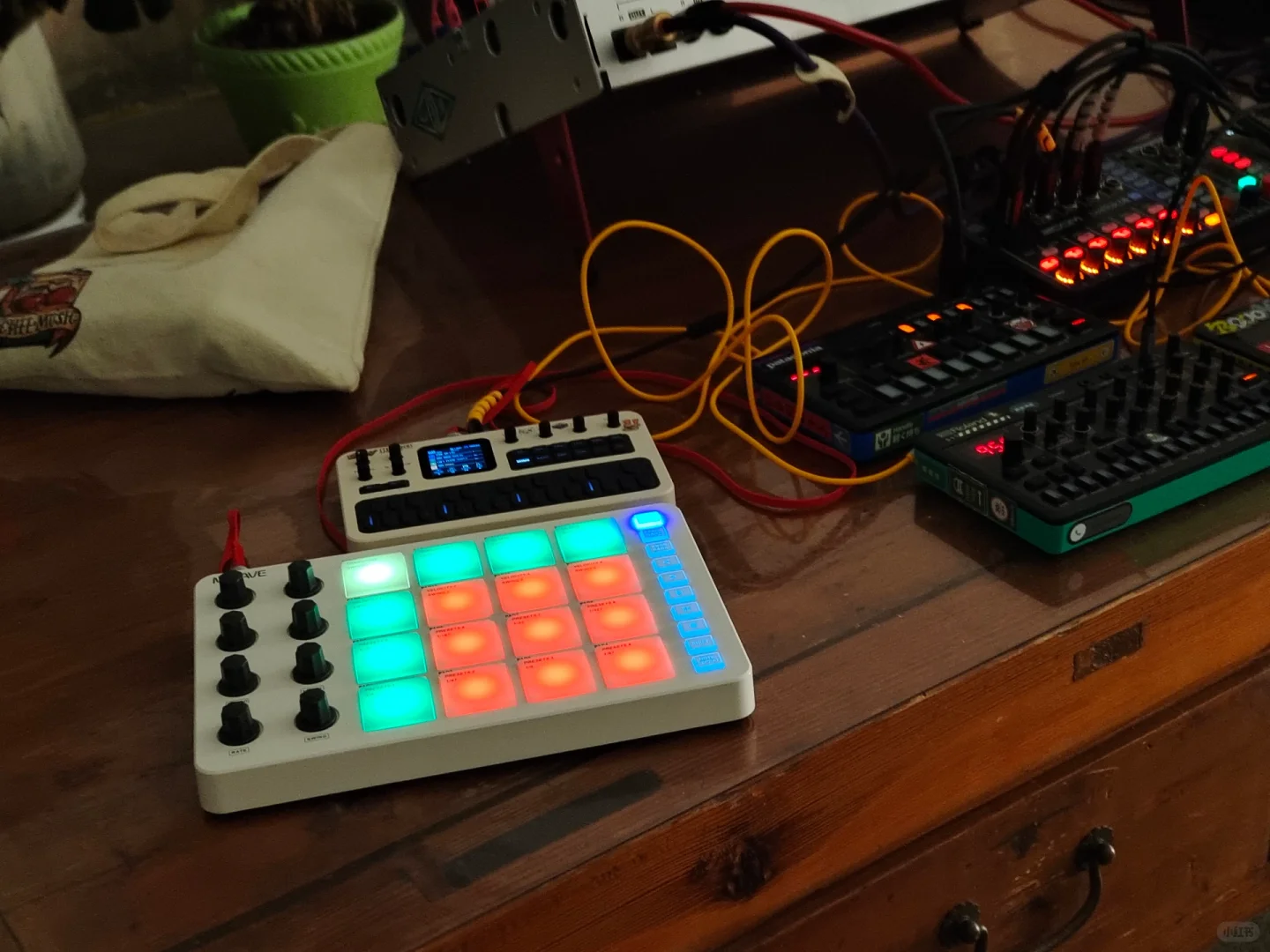
In the late summer someone reverse-engineered the firmware and published the scripts. This led to a blossoming firmware ecosystem: Felucca, a nine-engine synth by a Japanese maker called Hügelton Instruments; Sloop, which turns the FM-1 into a four-track groovebox; X0X, which puts a 303, an 808 and a 909 into one free image; Baud Girl, Groove OS, Lunar Modulator, Melodee; JIANT FM, and MIN-1, a Philip Glass firmware that “plays itself on power-up”. [22]
A Sichuan-based user explained what was happening:
“The stock firmware UI is a bit crude, limited, no multitrack loop recording. But because the platform was later opened up, loads of people, professional software engineers among them, vibe-coded their own open-source firmware, and a wave of excellent plugins appeared, updated at a furious pace, pouring out like game mods. This is probably a real shock to the historically rather closed music-hardware ecosystem. I’m thinking of building my own firmware next; the barrier is now effectively zero.” [23]
A reply from Singapore continued the thought: “You can think of it as a platform now. It loads dozens of music tools with different functions and genres, things that used to each require a dedicated piece of hardware.” On Hacker News: “AFAIK, all of them are vibecoded, but that doesn’t mean they’re not super fun.” And on Reddit, in the thread about Teenage Engineering leaving the synthesizer business: “M-Vave FM1 with custom firmware Sloop is OP 1 killer for me. I used to own OP1, sold it for same price I bought it new.” [4]
I can attest, during the writing of this piece I created my own personal versions of Jungle Samplers, Bass Resonators, and Vocal Chops tools — quickly housed in a brand called ‘Night Machines’. They’re software for now, but I could use off-the-shelf components and 3D printed enclosures sent from Shenzhen back to Shanghai within weeks.
In Shanghai a user posted a synth he had an agent compile for an ESP32 pocket computer that cost him about as much as a TE lanyard. He said, “last year I was still spending thousands buying synths to play with. Now the patches are free downloads, and it turns out an agent can compile a synth out of code. I’m so happy.” Another user in Guangdong has published his own OP-1-alike for the same board under the name OP-CP and open-sourced, alongside the code, the agent skill that generated it. [24]
If the clone is just a prompt, and the product bundle is increasingly easy, it’s the remaining attitude that Kouthoofd says he wants to keep.
Shanzhai, Gongkai, Chindogu
Last week the Inner Chapter book club read The Machine Decision Is Not Final, an anthology on China and the history and future of artificial intelligence edited by Benjamin Bratton, Anna Greenspan, Amy Ireland and Bogna Konior.
One thread our China team keeps pulling is the changing valence of shanzhai, 山寨. Once a pejorative for the bootlegged, pirated and counterfeit, particularly in the electronics markets of Shenzhen and Hong Kong, it now carries, for Chinese speakers at least, a stronger connotation of ingenuity inside imitation, a freedom that asks “why not?” and improves the product to fit the life.
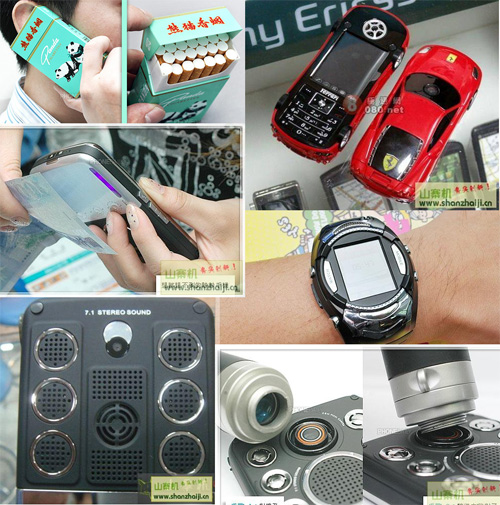
Greenspan and Konior’s introduction makes the link to the present situation: “it is precisely this ability to rapidly reproduce high-tech products at a fraction of the cost that is at the heart of Chinese technoindustrial competitiveness. This was made clear by the shanzhai (copycat) mode of cell phone production centred in the coastal city of Shenzhen … DeepSeek demonstrated that this mode of production can also be mobilised in the realm of AI.”
And then: “DeepSeek has renewed the promise of free, open-source technologies; once released into the world, these cannot be contained.” [25]
The behaviours we see emerging in decompiling have been going on in Shenzhen since long before the AI boom.
Taking apart a $12 phone in 2013, Bunnie Huang called this ecosystem gongkai, 公开, “a different kind of open ecosystem” in which reference designs and board files circulate without licences and value exists in the speed of the next variation: “I could, in theory, at this point attempt to build a version of this phone for myself, with minimal cash investment.”
Silvia Lindtner and Greenspan’s Shenzhen design-house informant put it better: “We call this shanzhai in Shenzhen. It’s a mass production artwork.” [26]
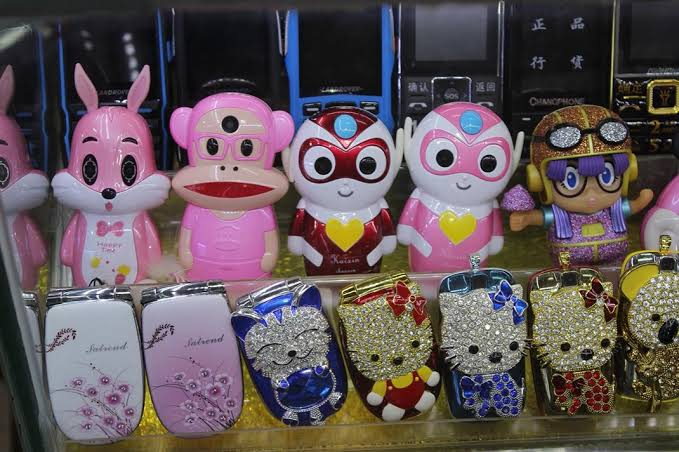
Those with any interest in this area will have read Byung-Chul Han’s Shanzhai: Deconstruction in Chinese, where the author makes a philosophical case that what the West sees as desecration, the Chinese tradition reads as continuation, the original as something determined “not by an act of creation but by unending process”. [27]
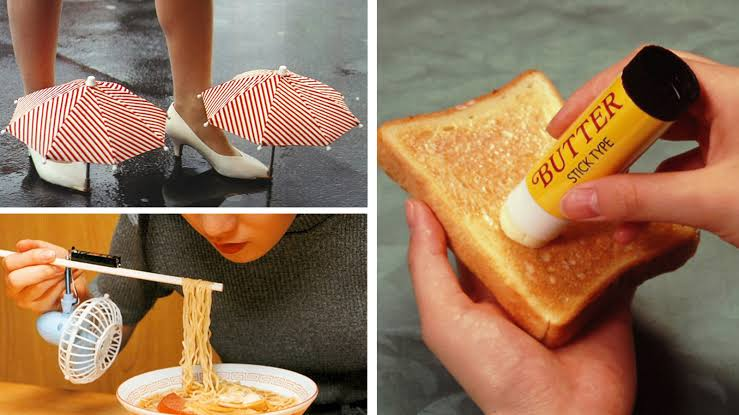
This sensibility towards open-innovation has strong roots in Asia. Japan has its own versions. Kenji Kawakami’s Chindogu, the “unuseless” inventions of the 1990s were often understood as comedy, but really they were “what if? and why not?” product design questions in search of better outcomes. Kawakami called the practice “an intellectual game to stimulate anarchic minds” and stated “there must be a spirit of anarchy.” [28]
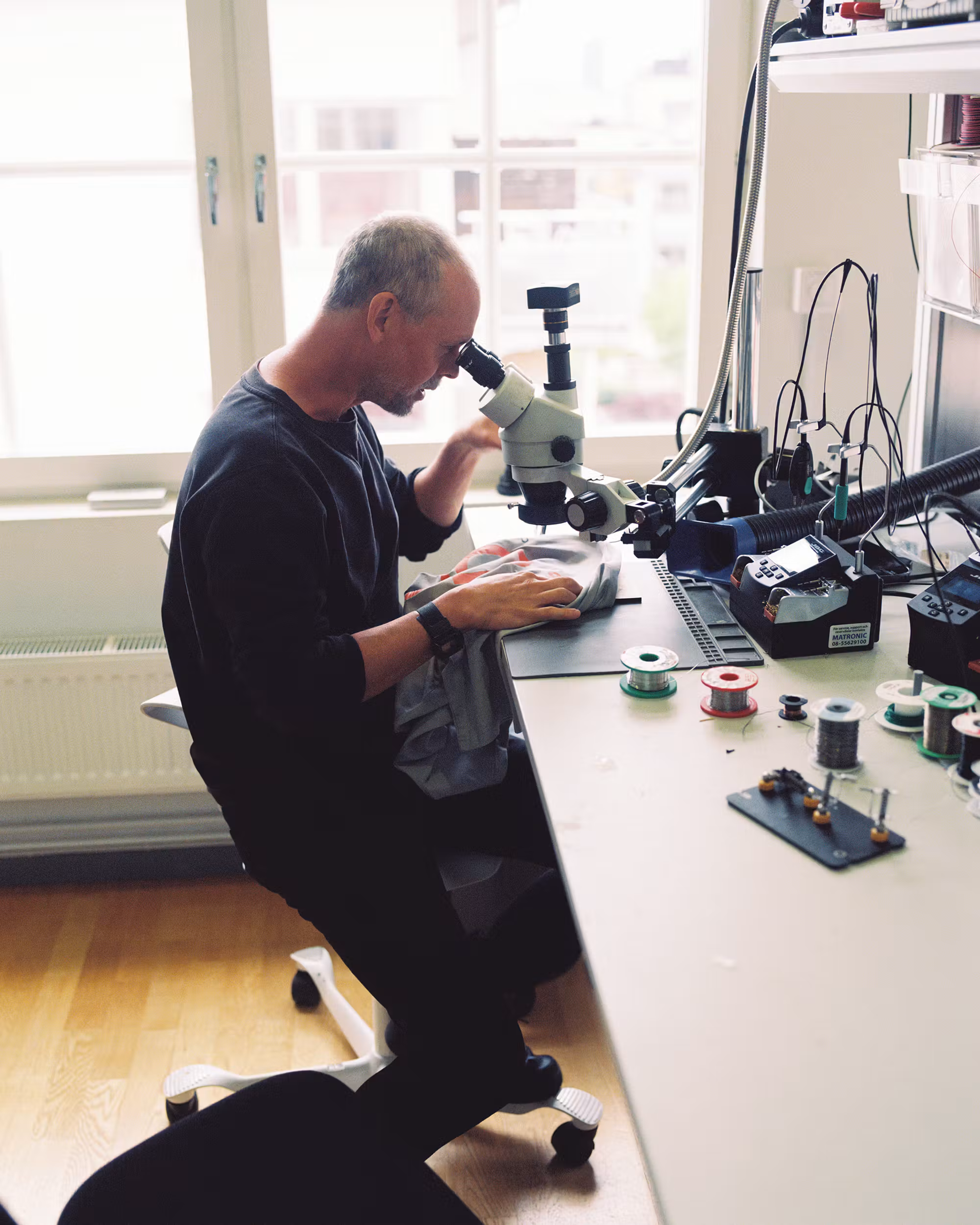
Kouthoofd’s opening line to Highsnobiety is “What you do when you’re 10 is what you should be doing when you’re grown up.” His process is a maker’s: overhear someone wishing a unit existed, “run home straight away. I have a woodshop, 3D printers, a sewing machine — everything. I’ll make a model, bring it back to the office.”
His designer Yi-ying Hsieh says of this process, “Other companies I’ve worked at try to make a faster horse. Jesper tries to make a car.” [2] The spirit of Teenage Engineering is to design through the inquisitive mind of a ten-year-old rather than a product manager at a technology firm pacing an incremental roadmap, as most of the industry does.
Interestingly, the company has flirted with the open file for years: in 2012 it put the OP-1’s replacement-part CAD in its library “for you to download”. In 2015 it released the Pocket Operator DXF files with a DIY design contest and in 2025 it engineered a PC case down to a cost of zero and gave it away. [29]
The Innovator’s New Dilemma
The original innovator’s dilemma was that good management kills great firms: you listen to your best customers, improve along the dimensions they value most, and ignore the cheap, simple, remote market until someone grows up and eats your share.
The new dilemma is that the competitive market might now include your own customer. We’ve worked on so many projects where ‘personalisation’ emerges as a consumer wish, but is a non-starter of a business idea for a brand.
But there’s something in a certain subset of brands where users are passionate about the product. The consumer who loves the OP-1 enough to learn its tape engine is the one who “already replicated a lot of the tape engine of the OP-1 in Rust”. [30] The user who could not afford it is the one who had a model clone the interface in half an hour.
The moat was supposed to be a unique proposition and design identity, but it turns out to be one of the assets that AI learns most easily, precisely because it is the part that is most legible, most documented, and most lovingly shared by fans.
We think that is an interesting inversion on the SaaSpocalypse from earlier in 2026 [31], and the now common misreading of what is safe and sacred from AI. That first wave of AI anxiety was all about the axis of productivity: replicating video calling software, open-sourcing CRM, letting agents take over and destroy the per-seat economic model.
Yet this current wave (again) challenges creativity, and the victims are not the companies whose products were commodities. Instead, they are the companies whose products had distinct personalities, whose defence was that nobody else would think or want to make a medieval sampler or a reggae groovebox, or a choir of wooden dolls.
But the idiosyncratic device, which was supposed to be the thing a mass-market competitor could not copy, is exactly the thing a single user wants to make themselves.
So the retraction from synths does not surprise us at all. It comes across as an early acknowledgement that the market for idiosyncratic and esoteric electronic musical devices has shifted: not only to the competitors who entered the market Teenage Engineering itself created, but to the techne of users who are using reverse engineering, vibe coding, and cheap fabrication to make their own wild devices.
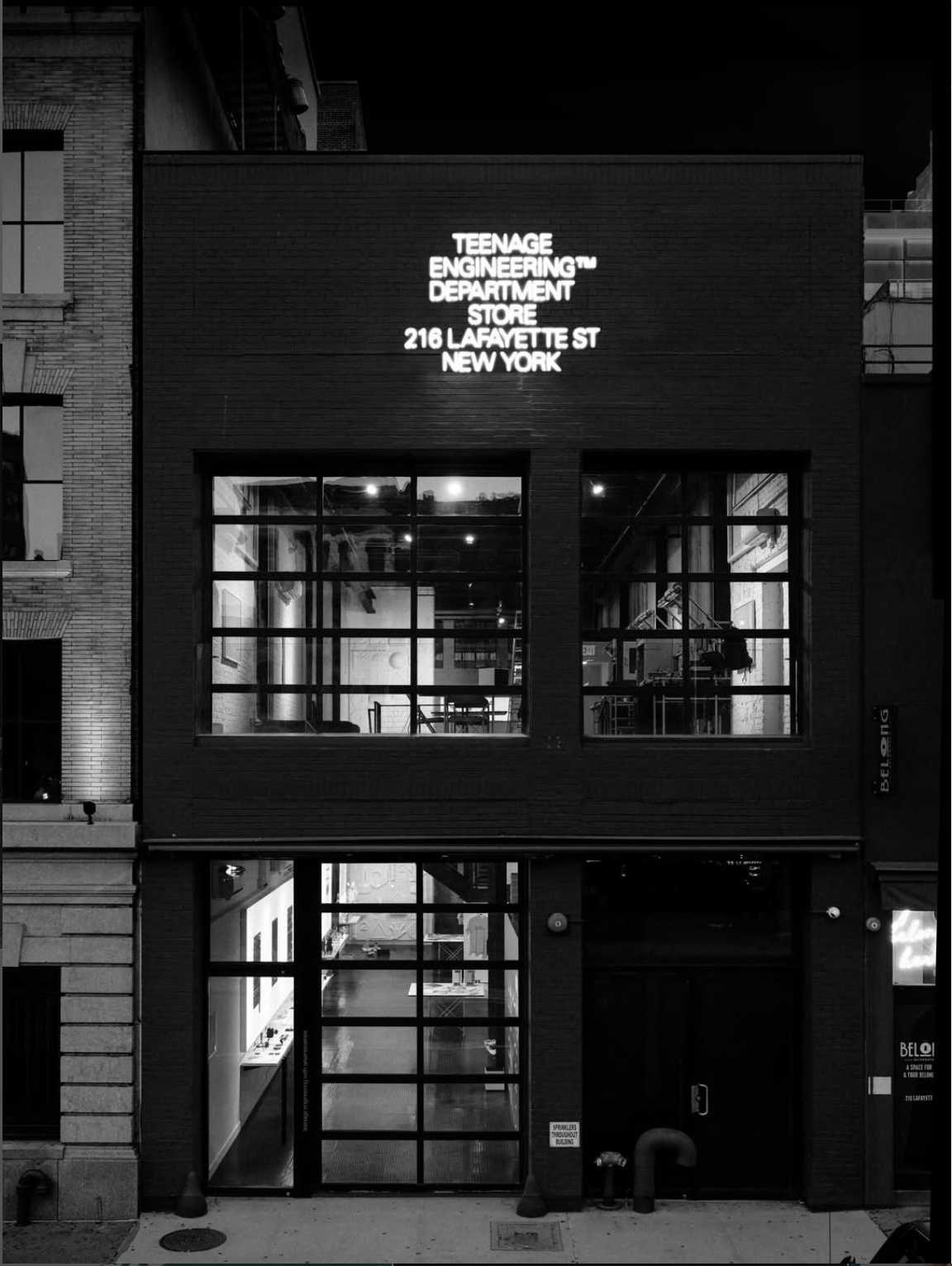
The New York department store that opened on Lafayette Street the day after the interview feels directional for a forward-looking company. Opening guests “could build their own EP-133 K.O. II on a production line” on the upper floor. [32]
So the company that is leaving synths behind has installed, as its flagship experience, a workshop in which the customer assembles one themselves.
We’ve been thinking a lot about the changing nature of brands in our new era — including the idea of how a brand can manifest as a protocol with digital and physical forms — and we think Teenage Engineering might be it.
References
[1] 特伦斯张, Xiaohongshu, 19 September 2026, https://www.xiaohongshu.com/explore/6aae4ca0000000002a02e7eb. Translation ours.
[2] Lukas Mauve, “Teenage Engineering Is Going to Stop Making Synths”, Highsnobiety, 7 October 2026, https://www.highsnobiety.com/p/teenage-engineering-interview/.
[3] Lawrence Bonk, “Teenage Engineering’s EP-40 Riddim”, Engadget, 5 November 2025.
[4] r/synthesizers, “Teenage Engineering Is Going to Stop Making Synths”, 7 October 2026, https://www.reddit.com/r/synthesizers/comments/1x07g5p/. Comments by u/TurbulentWing3820, u/DrDuned, u/mvsr990, u/sunny_happy_demon, u/brutishbloodgod, u/Frantic_Mantid, u/FloopersRetreat, u/Not_Obsolete.
[5] Midifan and Dave, Xiaohongshu, 8–11 October 2026, https://www.xiaohongshu.com/explore/6acb689100000000140031e9 and https://www.xiaohongshu.com/explore/6ac71dda000000001203991b, with comments. Translation ours.
[6] 合成少数派 and 太妃糖Taffee, Xiaohongshu, January and April 2024, on the Yamaha Seqtrak as “OP-1 平替”.
[7] SOMA Laboratory, Cosmos, https://somasynths.com/cosmos/; Enigma, https://somasynths.com/enigma/, debuted Superbooth May 2026, shipping from 25 August 2026 (SonicState, 26 August 2026).
[8] Telepathic Instruments, Orchid, announced 26 November 2024; worldwide launch October 2025 at $699. Yanko Design, “alt-universe Teenage Engineering”.
[9] MusicRadar, “‘This is just the beginning’: Nopia launches on Kickstarter and hits $1.4m in 24 hours”, September 2026, https://www.musicradar.com/music-tech/this-is-just-the-beginning-nopia-launches-on-kickstarter-and-hits-usd1-4m-in-24-hours.
[10] Synth Anatomy, “Donner Sample Boy: Is a TE OP-1 inspired Synthesizer and sampler coming soon?”, August 2026, https://synthanatomy.com/2026/08/donner-sample-boy.html; 筷子夹汉堡, Xiaohongshu, 28 August 2026.
[11] Roberto Verganti, Design-Driven Innovation: Changing the Rules of Competition by Radically Innovating What Things Mean (Harvard Business Press, 2009).
[12] David A. Aaker, “Innovation: Brand It or Lose It”, California Management Review 50:1 (2007).
[13] Clayton M. Christensen, The Innovator’s Dilemma: When New Technologies Cause Great Firms to Fail (Harvard Business School Press, 1997), 15.
[14] morluto, REA: Reverse Engineer Anything, https://github.com/morluto/rea (280,616 stars on 16 October 2026; created 14 April 2026); Hacker News, 10 October 2026, https://news.ycombinator.com/item?id=50028275; Jose Antonio Lanz, Decrypt, 12 October 2026.
[15] Brandon Thomas, ArtCraft (PhotoCraft, VectorCraft, FilmCraft, LightCraft, PrintCraft, EffectCraft, DesignCraft), github.com/storytold, from 30 September 2026; Hacker News comments 1, 5 and 10 October 2026, https://news.ycombinator.com/item?id=49928088, https://news.ycombinator.com/item?id=49959605, https://news.ycombinator.com/item?id=50029110; Victor Tangermann, Futurism, 14 October 2026; Edna Mohamed, Al Jazeera, 14 October 2026.
[16] All-In Podcast E292, 10 October 2026, https://youtube.com/watch?v=TBLHdXABwAg; clip at https://x.com/theallinpod/status/2108897316086095923.
[17] Nikita Bier, X, 8 October 2026, https://x.com/nikitabier/status/2108262529571144176.
[18] “Taipei GTA”: madrobot.blog, 10 October 2026, https://madrobot.blog/2026/10/10/taipei-gta-ai-built-gta-clone-of-taipei-goes-viral/; developer quoted via Threads @aicodewithme. Rockstar Games Newswire, GTA VI release date 19 November 2026.
[19] Ableton press release, “Ableton Releases Max for Live”, Berlin, 23 November 2009.
[20] Cycling ’74 forums, “How to use code in a M4L device” and “Producer Pal: MCP server running in Node for Max to control Ableton Live”, 2026; Sorabeats, “FAT Rabbit BEAST”, note.com, 10 September 2026; Adam Murray, github.com/adamjmurray/producer-pal.
[21] 张志伟大仙, Xiaohongshu, 10 October 2026, https://www.xiaohongshu.com/explore/6acf29b00000000018004264. Translation ours.
[22] AL-255, “Reverse Engineering of the M-VAVE FM-1 Pocket Synthesizer Firmware”, https://github.com/AL-255/FM-1-RE, and Hacker News discussion, https://news.ycombinator.com/item?id=49994065; Hügelton Instruments (Leo Kuroshita), Felucca, https://github.com/hugelton/Felucca (507 stars; Trendshift C rank #5, 5 October 2026); Synthtopia, “Alt Firmware Options For The M-Wave FM-1 Pocket Synthesizer”, 4 October 2026; MATRIXSYNTH, “JIANT FM”, 10 October 2026; 自动货车, “MIN-1”, Xiaohongshu, 16 October 2026, https://github.com/Reytian/fm1-min1.
[23] 电子音乐考古小分队(深度探索AI中), Xiaohongshu, 11 October 2026, https://www.xiaohongshu.com/explore/6acb9f5c000000001a02a224, with comments. Translation ours.
[24] 土豆泥大王, Xiaohongshu, 18 September 2026, https://www.xiaohongshu.com/explore/6aacc3bf000000002b01c8ac; 哈喽, “OP-CP”, Xiaohongshu, 8 August 2026, https://www.xiaohongshu.com/explore/6a775b7a000000002402e735. Translation ours.
[25] Anna Greenspan and Bogna Konior, “Introduction: Fleeting Forces and Clever Machinations”, in Benjamin Bratton, Anna Greenspan, Amy Ireland and Bogna Konior (eds.), The Machine Decision Is Not Final: China and the History and Future of Artificial Intelligence.
[26] Andrew “bunnie” Huang, “The $12 Gongkai Phone”, 18 April 2013, https://www.bunniestudios.com/blog/2013/the-12-gongkai-phone/; Silvia Lindtner, Anna Greenspan and David Li, “Designed in Shenzhen: Shanzhai Manufacturing and Maker Entrepreneurs”, Aarhus Series on Human Centered Computing (2015).
[27] Byung-Chul Han, Shanzhai: Deconstruction in Chinese, trans. Philippa Hurd (MIT Press, 2017).
[28] Kenji Kawakami, 101 Unuseless Japanese Inventions (W. W. Norton, 1995); the Ten Tenets of Chindogu; interview, Ping Magazine, 2008.
[29] Teenage Engineering, OP-1 accessories CAD release (2012); Pocket Operator 10-series DXF/SolidWorks files and DIY design contest (2015); computer-2 (August 2025), per MusicTech: “They engineered it all the way down to a cost of 0.”
[30] r/teenageengineering, “How bummed are you…” (8 October 2026) and “Now that they won’t do synths anymore, we should ask them to open source all firmwares” (10 October 2026); comments by u/rigor_mortus_boner and u/johnsrude.
[31] Bloomberg, “What’s Behind the ‘SaaSpocalypse’ Plunge”, 4 February 2026; Hargreaves Lansdown (Matt Britzman), 7 October 2026, on sector recovery by category; CNBC, 18 September 2026.
[32] SonicState, “Teenage Engineering opens first store in New York”, 8 October 2026, https://sonicstate.com/news/2026/10/08/teenage-engineering-opens-first-store-in-new-york/; Resident Advisor, 8 October 2026.